Selected pieces from the studio

Lighting

Table Lamps

6 pieces
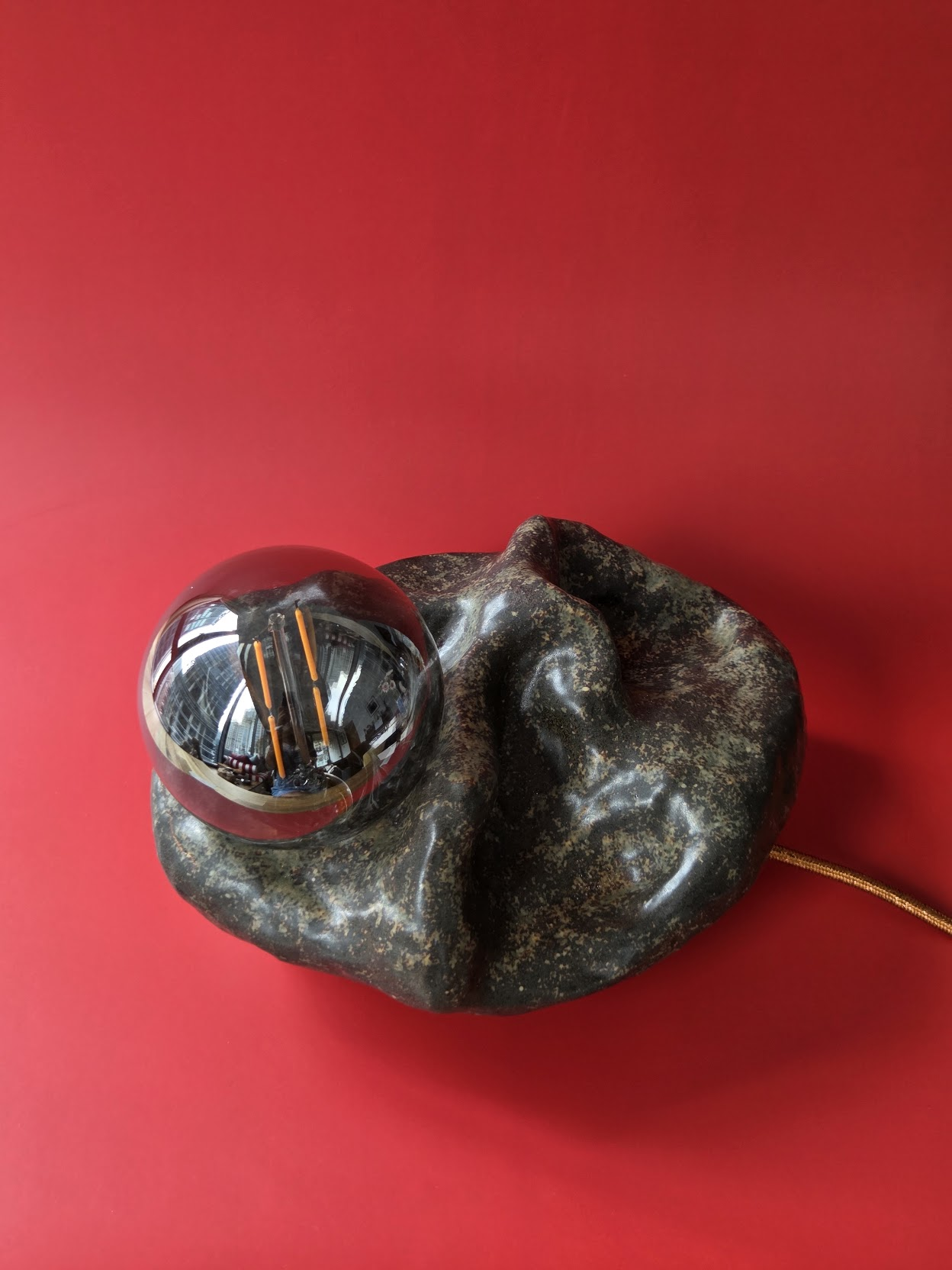
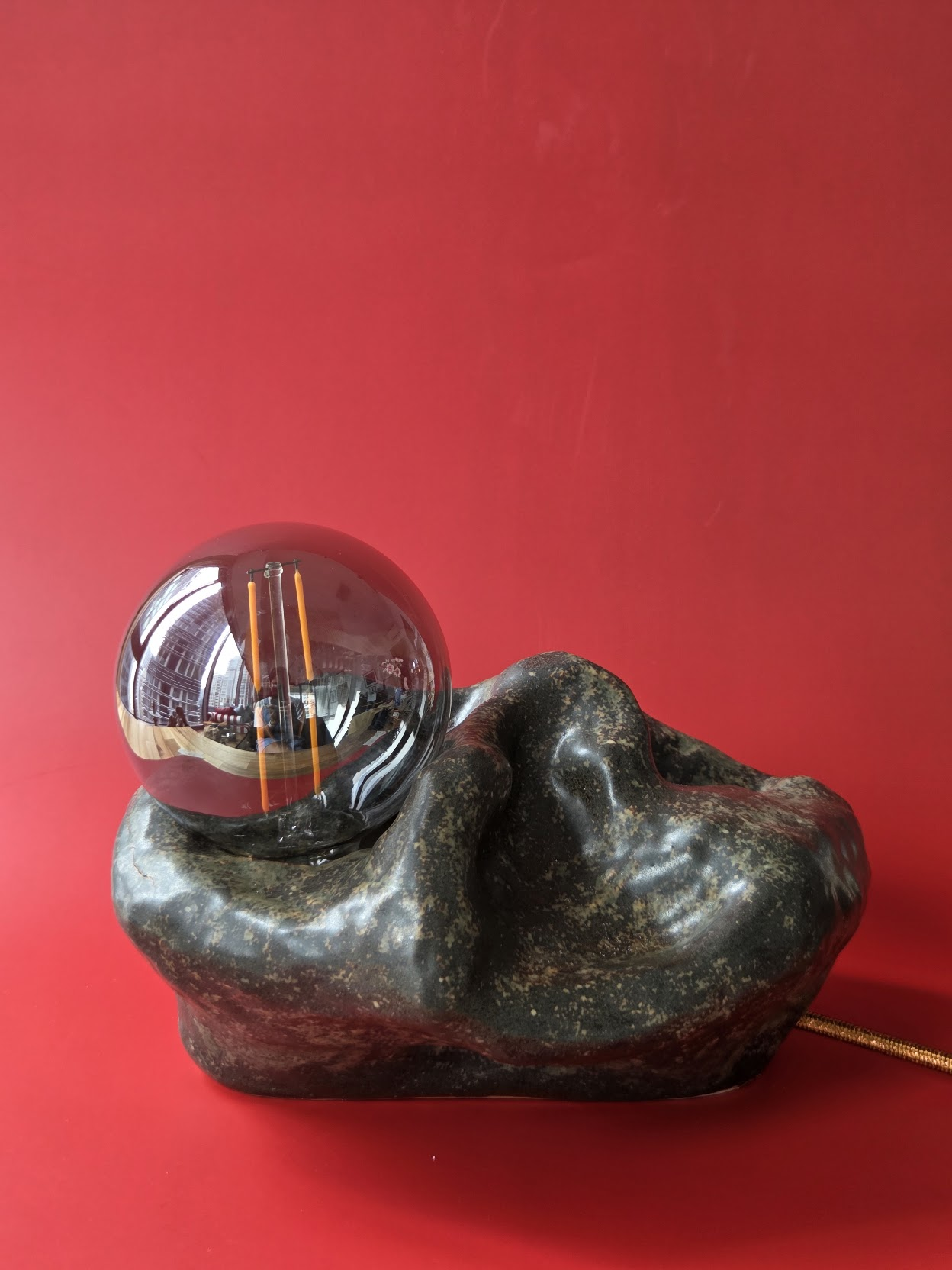
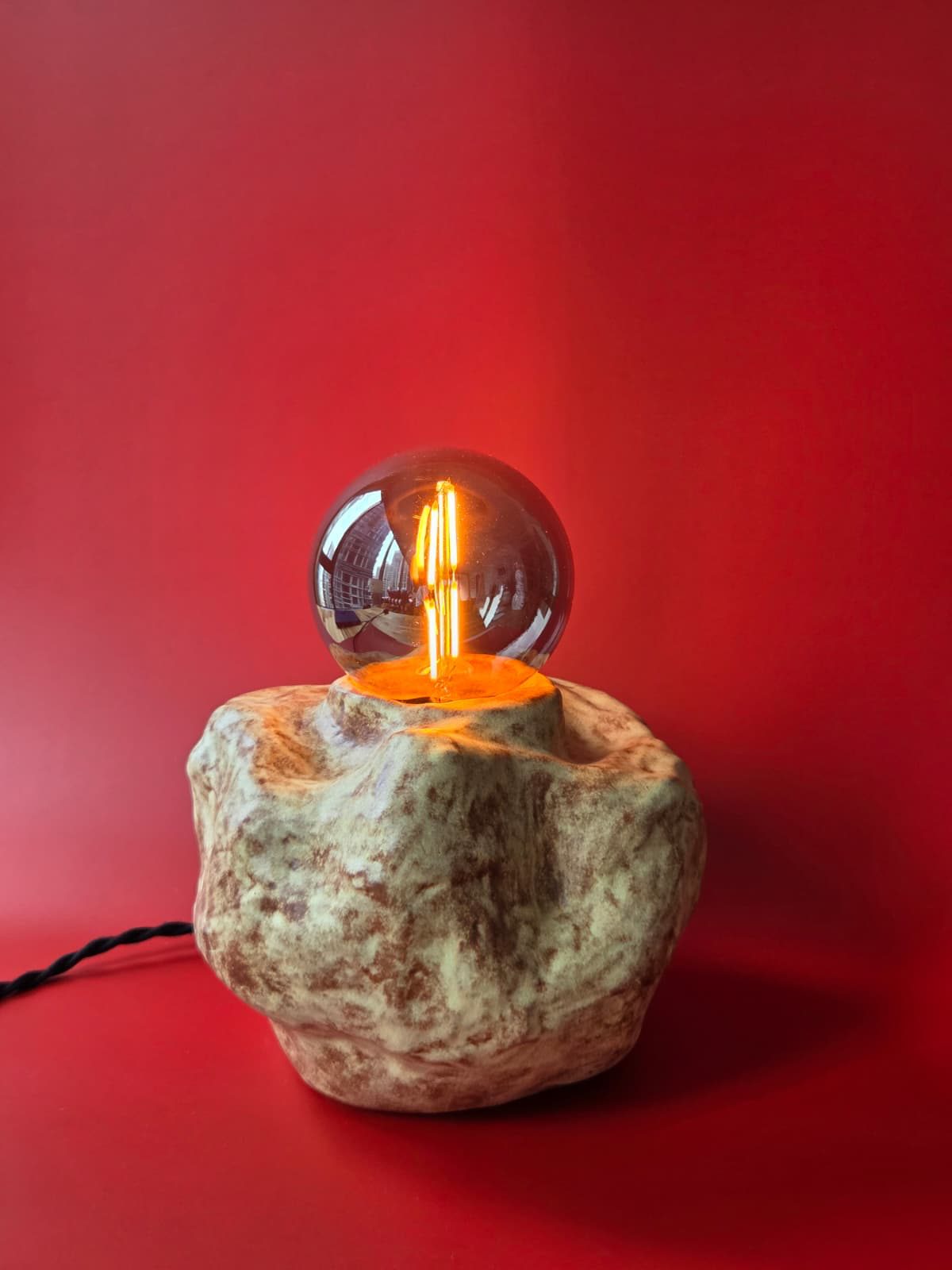
Illuminated Erratic stoneware lamp with a boulder-like form and glass globe against a red backdrop
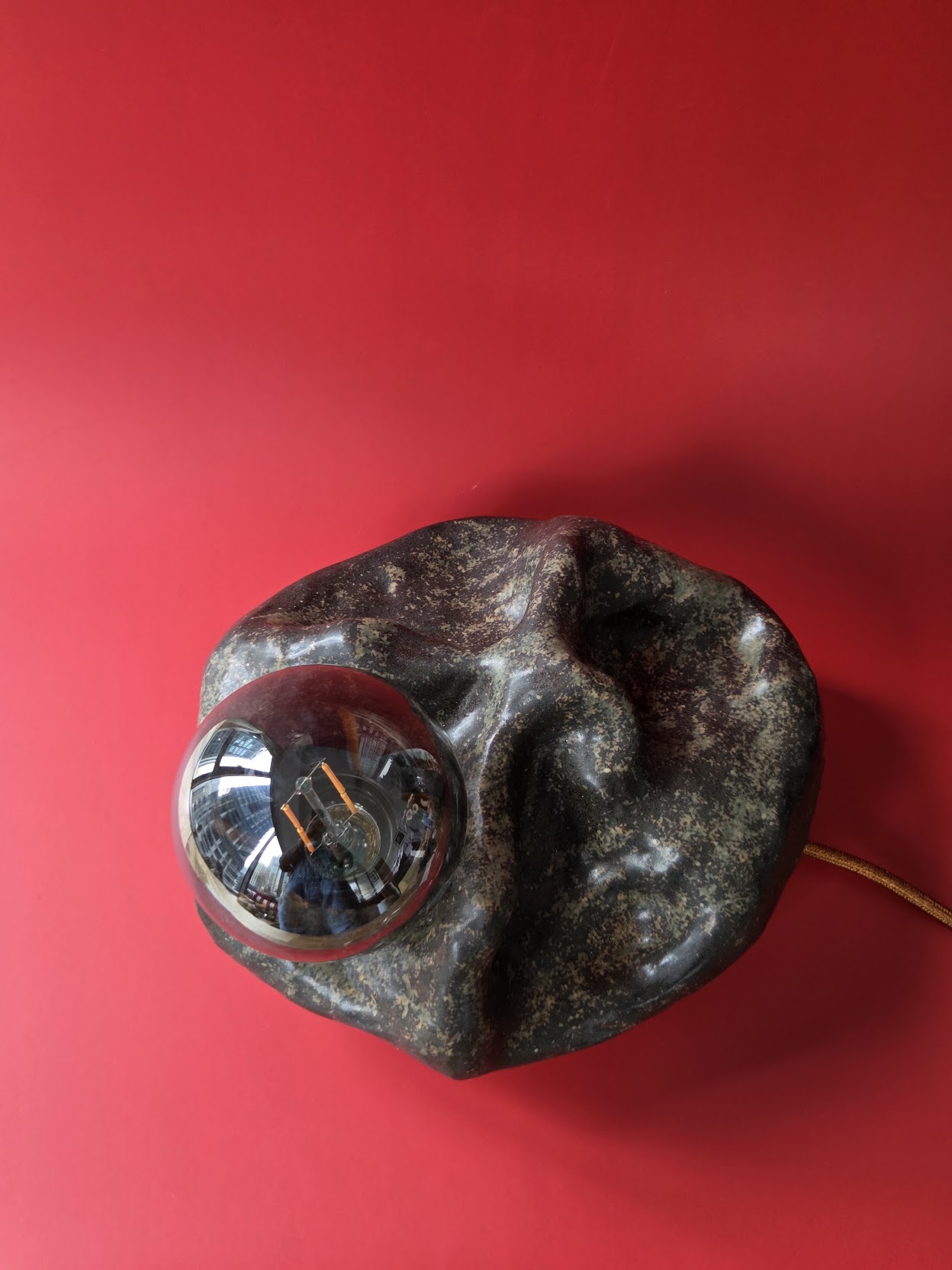
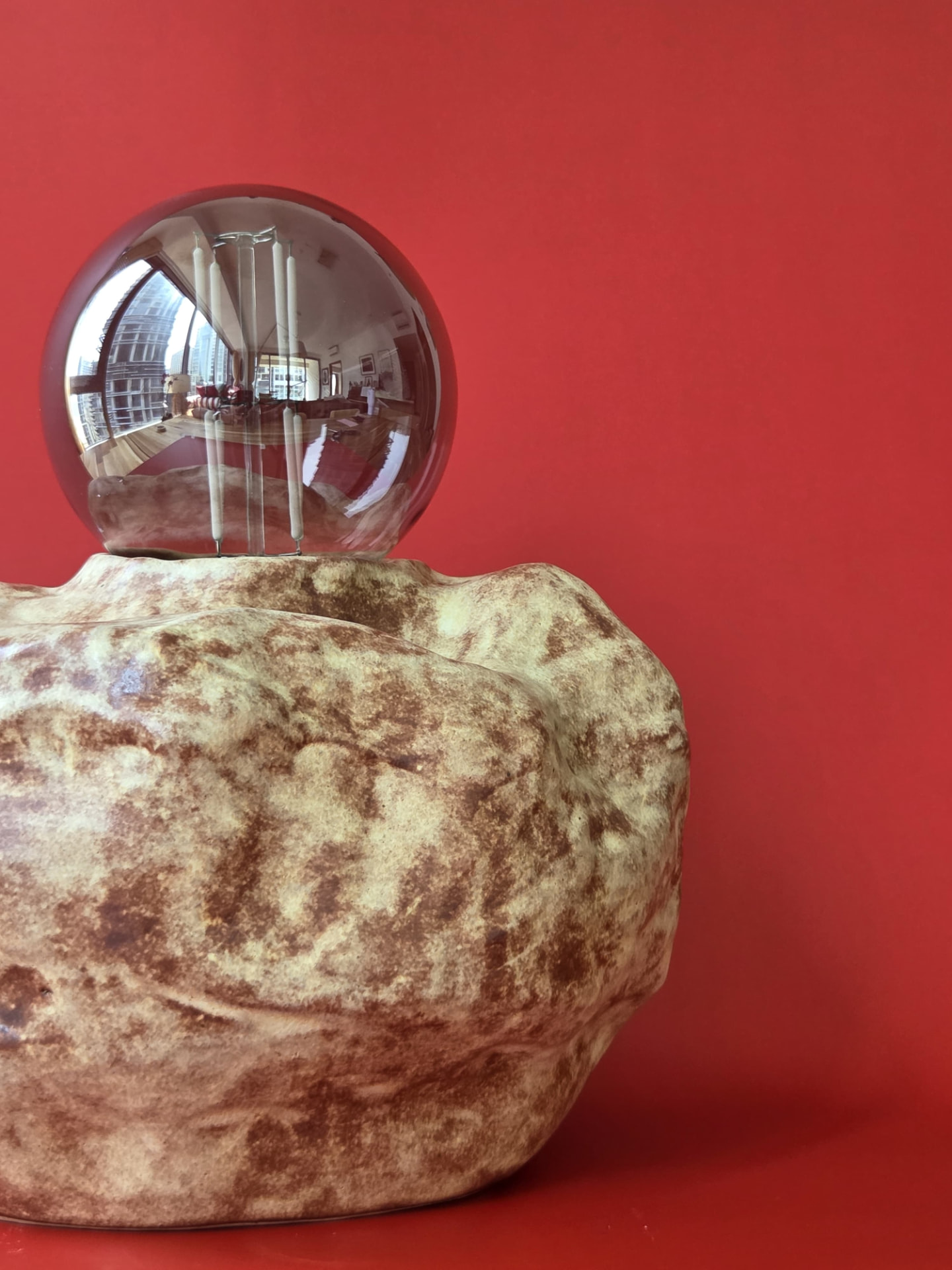
Close view of Erratic's irregular, weathered surface and smoked glass globe
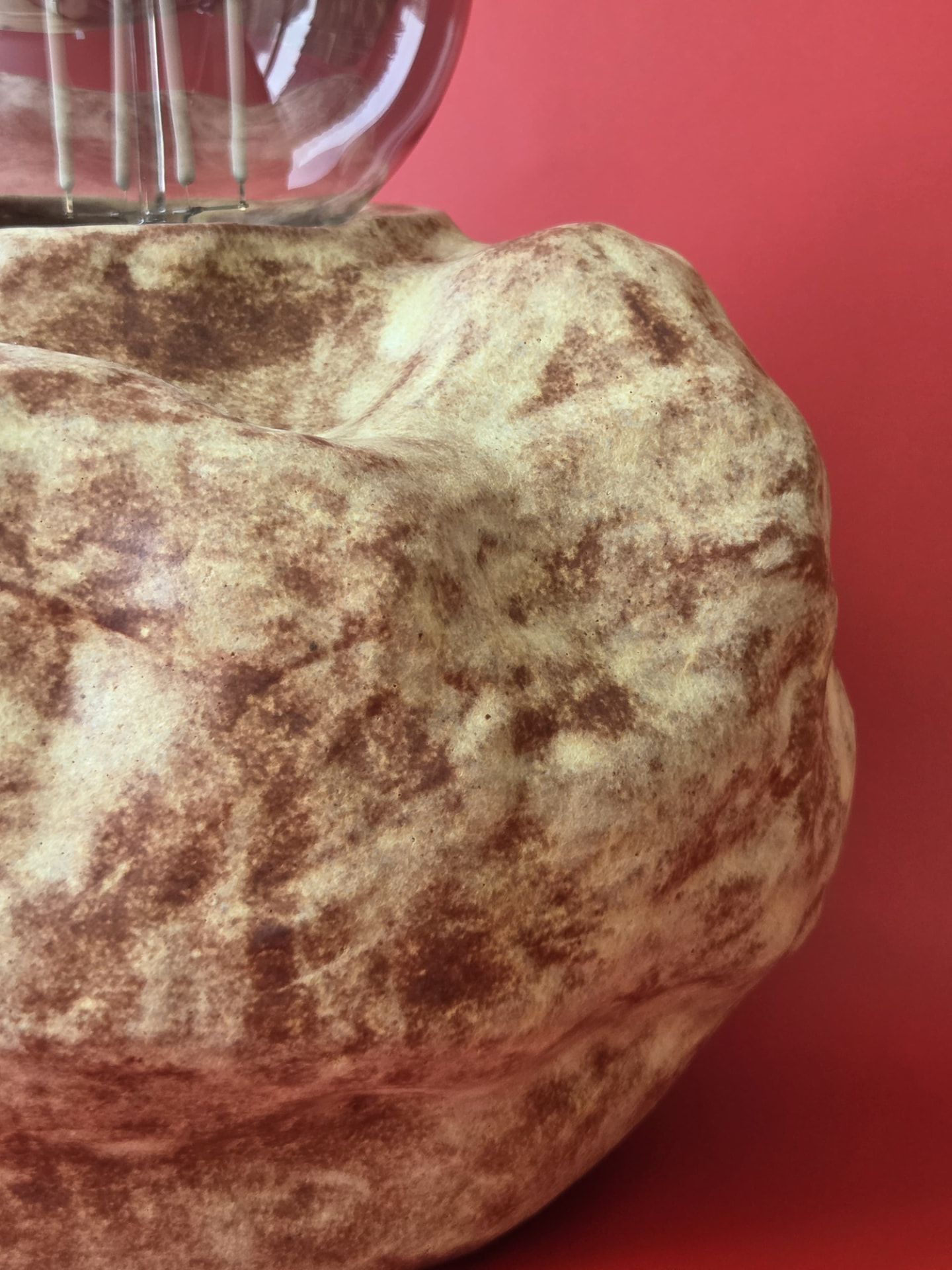
Detail of Erratic's mottled cream and brown glaze across its stone-like form
01

Erratic

Named for the geological term for a solitary stone displaced from its landscape, Erratic carries the weight and irregularity of weathered rock, while the smoked glass globe introduces a contrasting sense of balance, appearing to rest rather than sit.

Illuminated, the work shifts between sculpture and light, allowing the two materials to define one another.

Materials
Stoneware, smoked glass globe
Year
2026
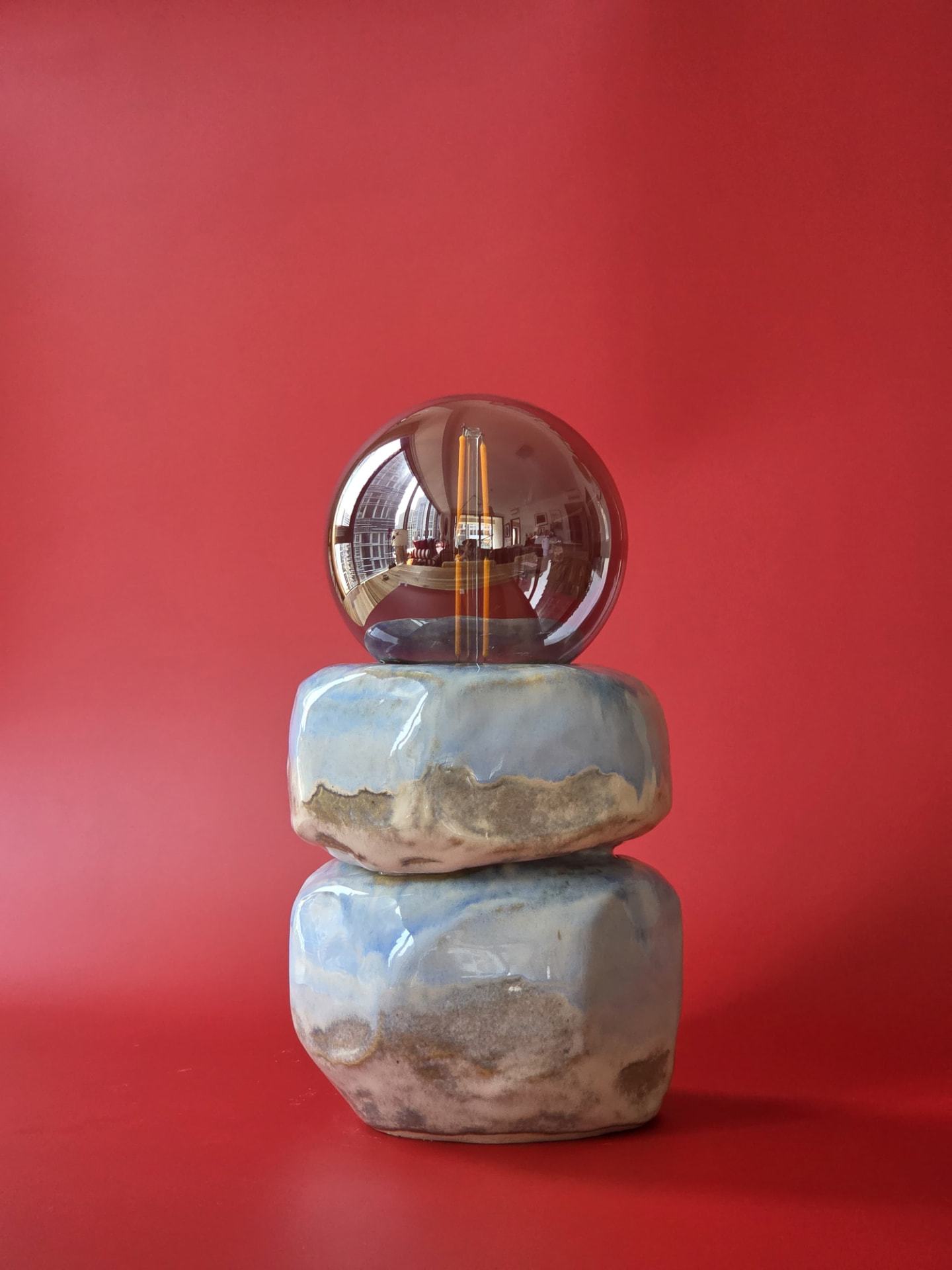
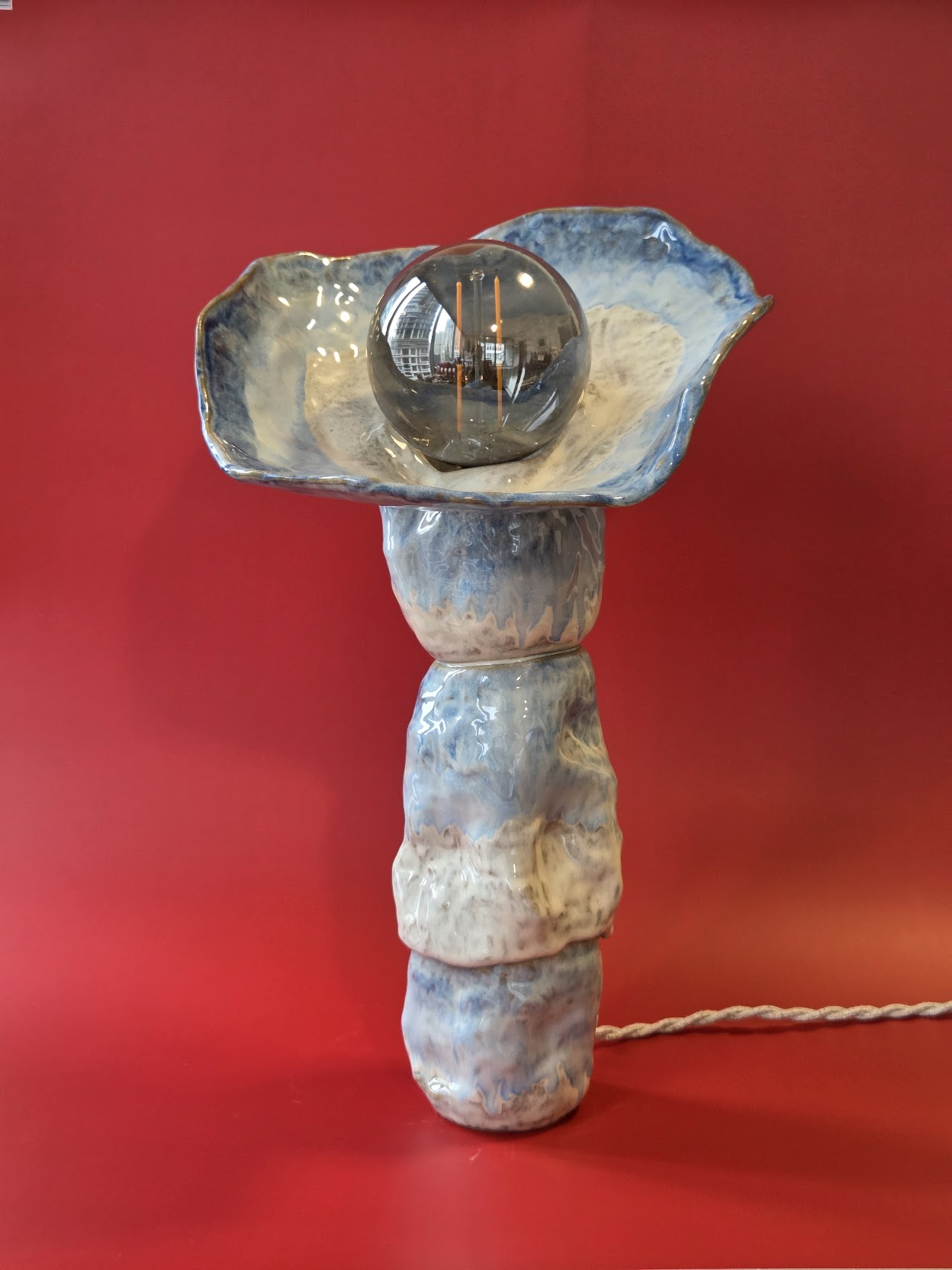
Cairn, a stoneware lamp made from two stacked forms with a smoked glass globe against a red backdrop
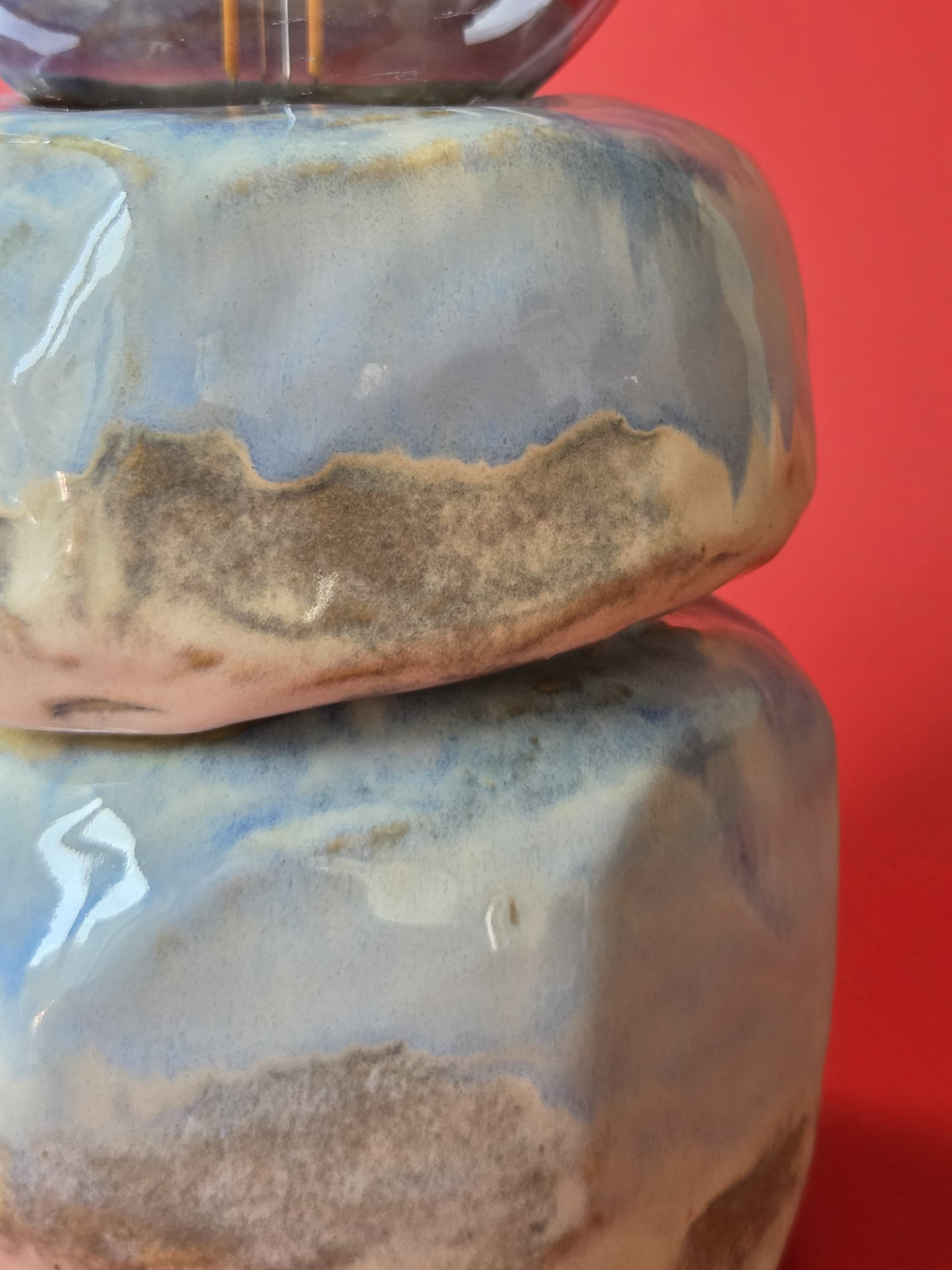
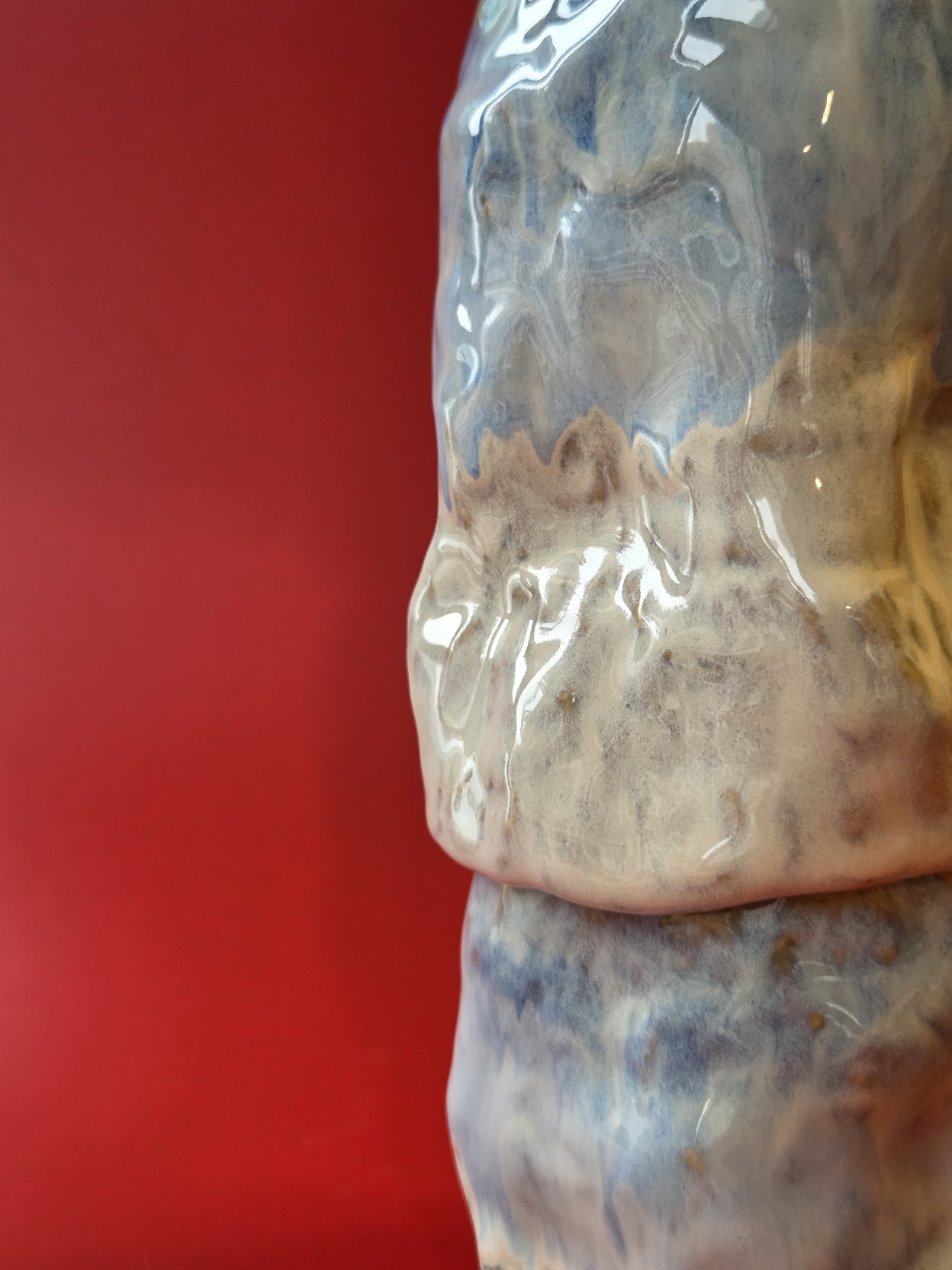
Close detail of Cairn's stacked forms with pale blue and sand-coloured glaze
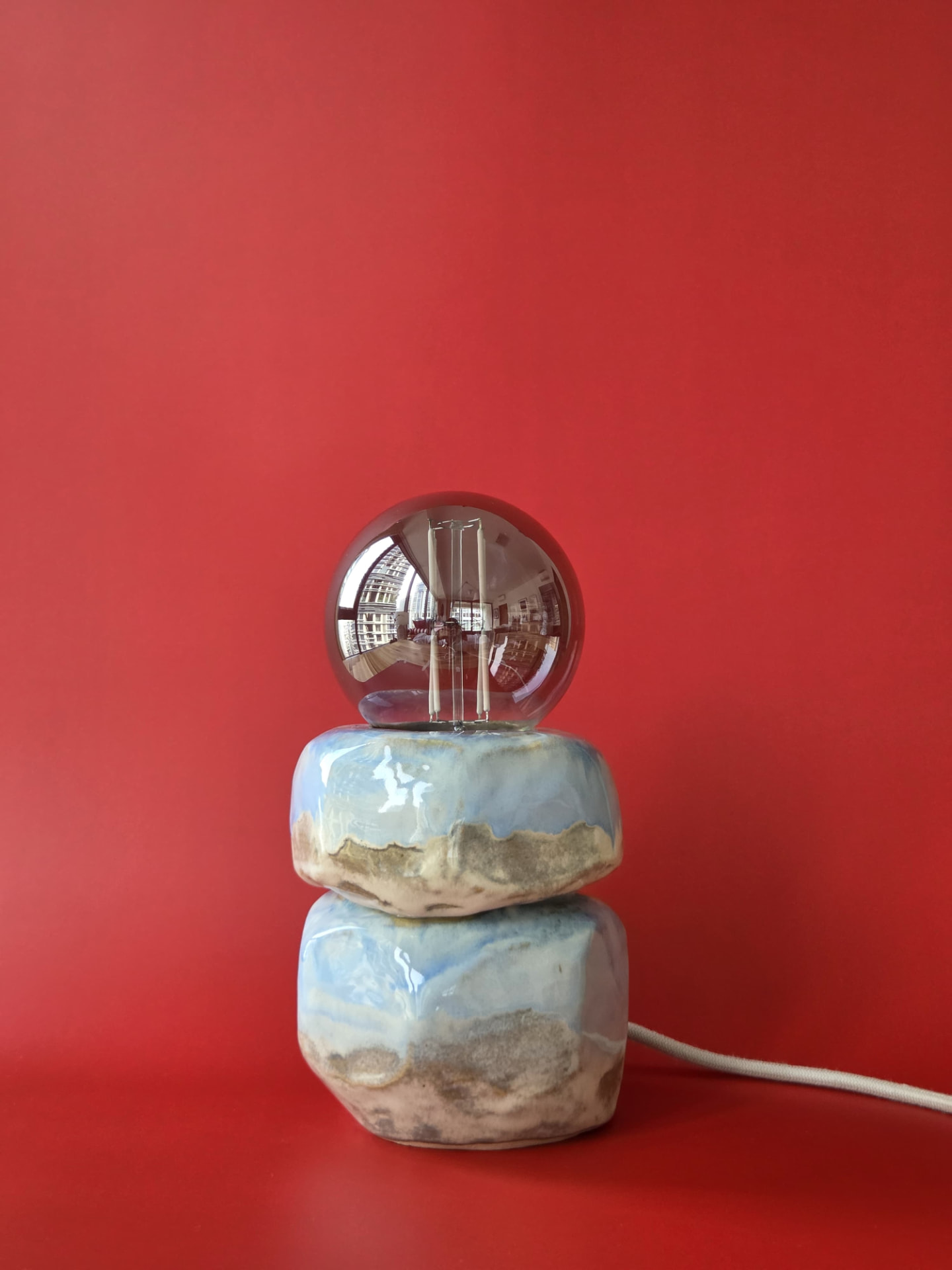
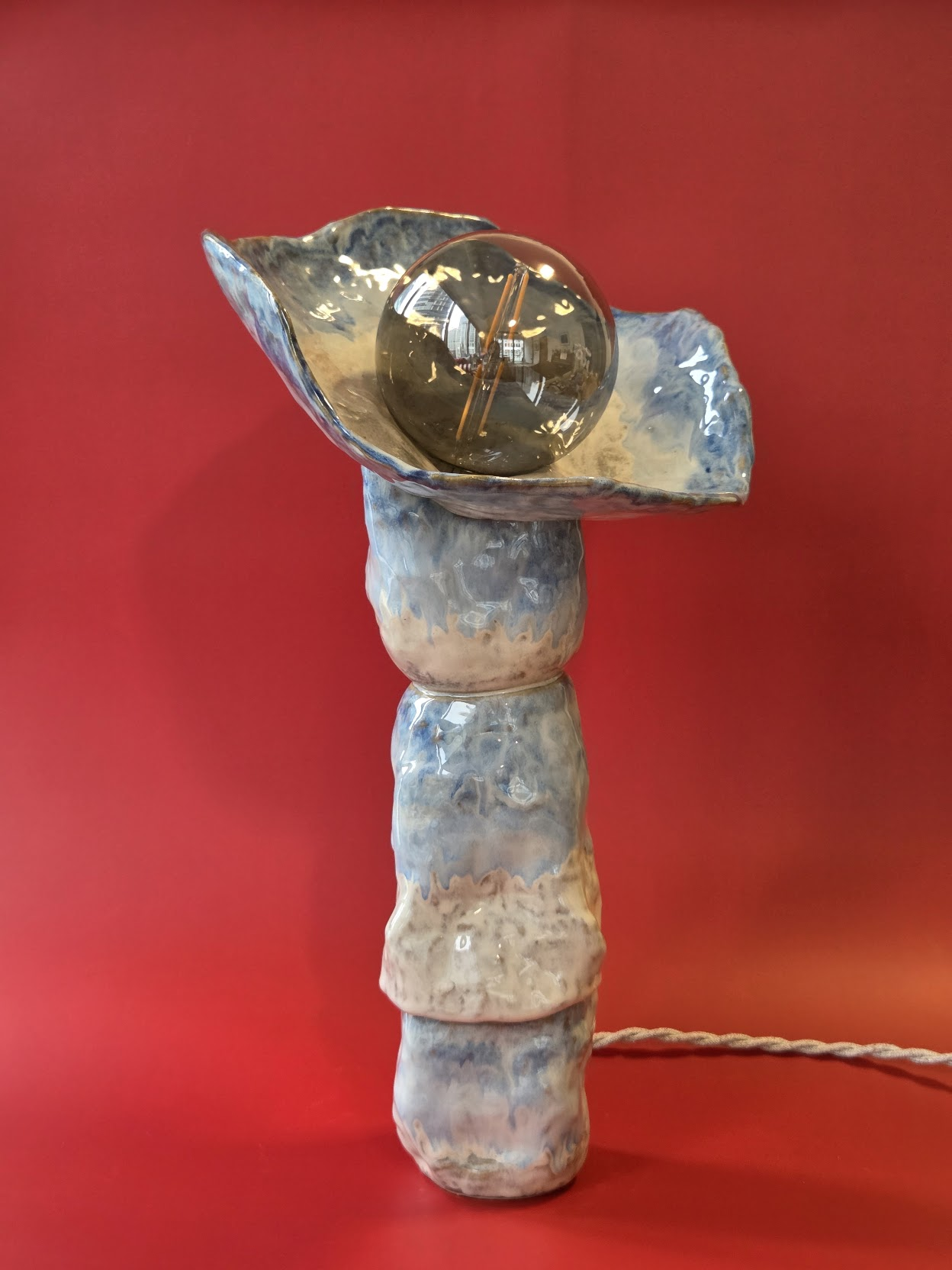
Cairn stoneware lamp with pale blue and sand-coloured glaze against a red backdrop
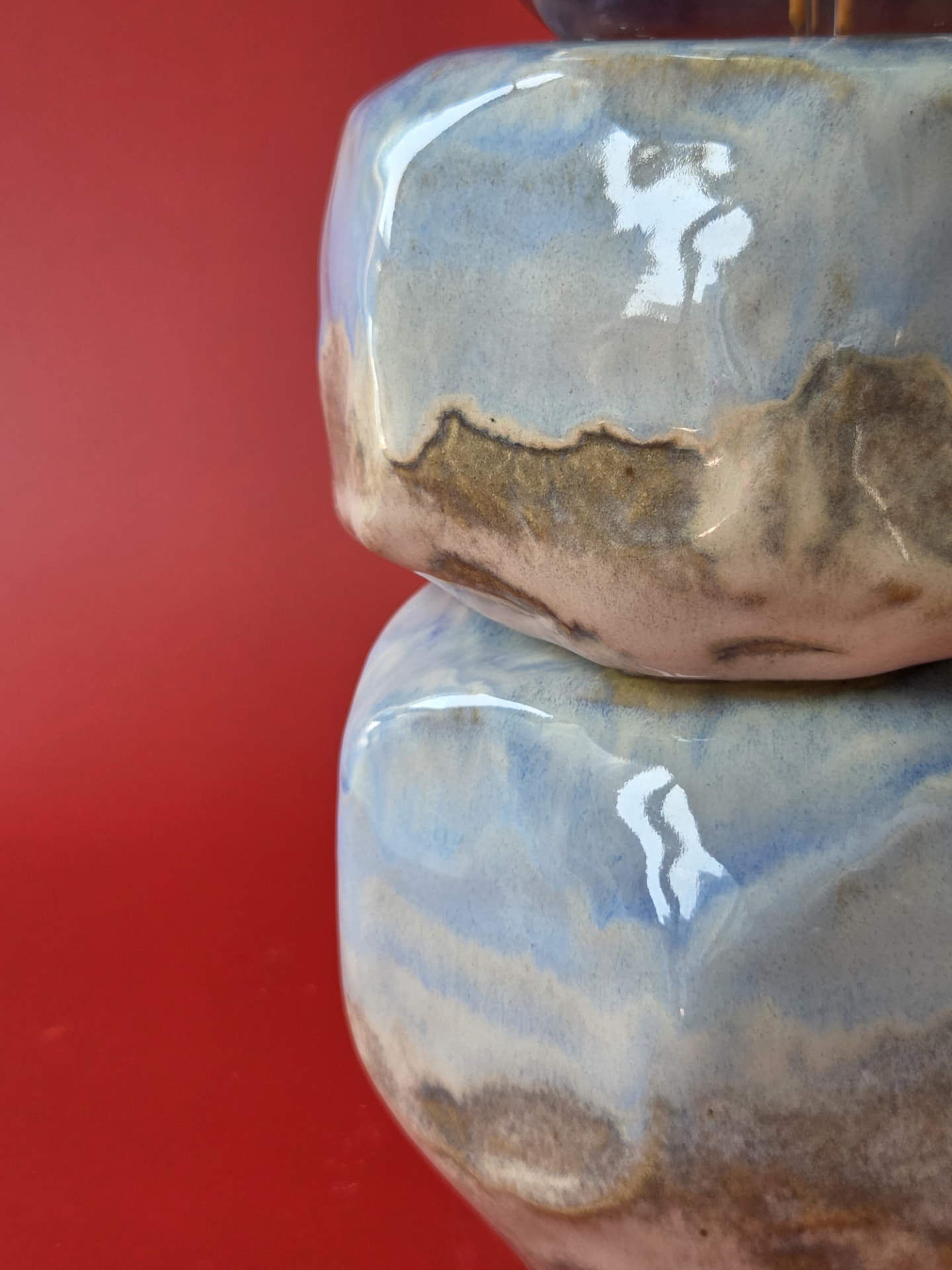
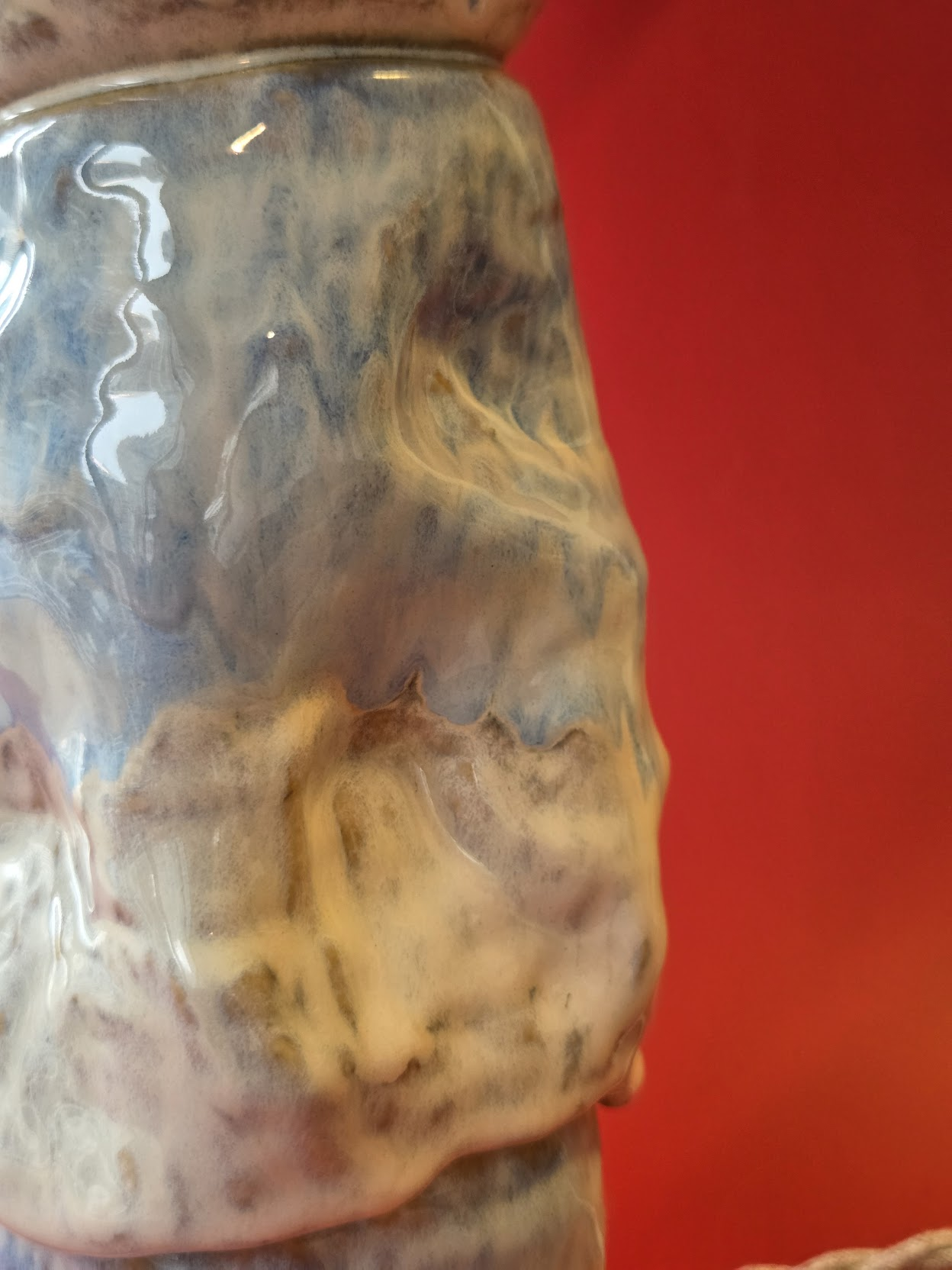
Detail of Cairn's blue, sand and brown glaze
02

Cairn

Cairn takes its name from stacked stones—objects that are both deliberate and precarious, markers of presence within a landscape.

The glaze was allowed to move freely during the firing, revealing its own topography across the surface. Rather than decorating the form, it became part of it. The smoked glass globe completes the composition, introducing light as the final material.

Materials
Stoneware, smoked glass globe
Year
2026
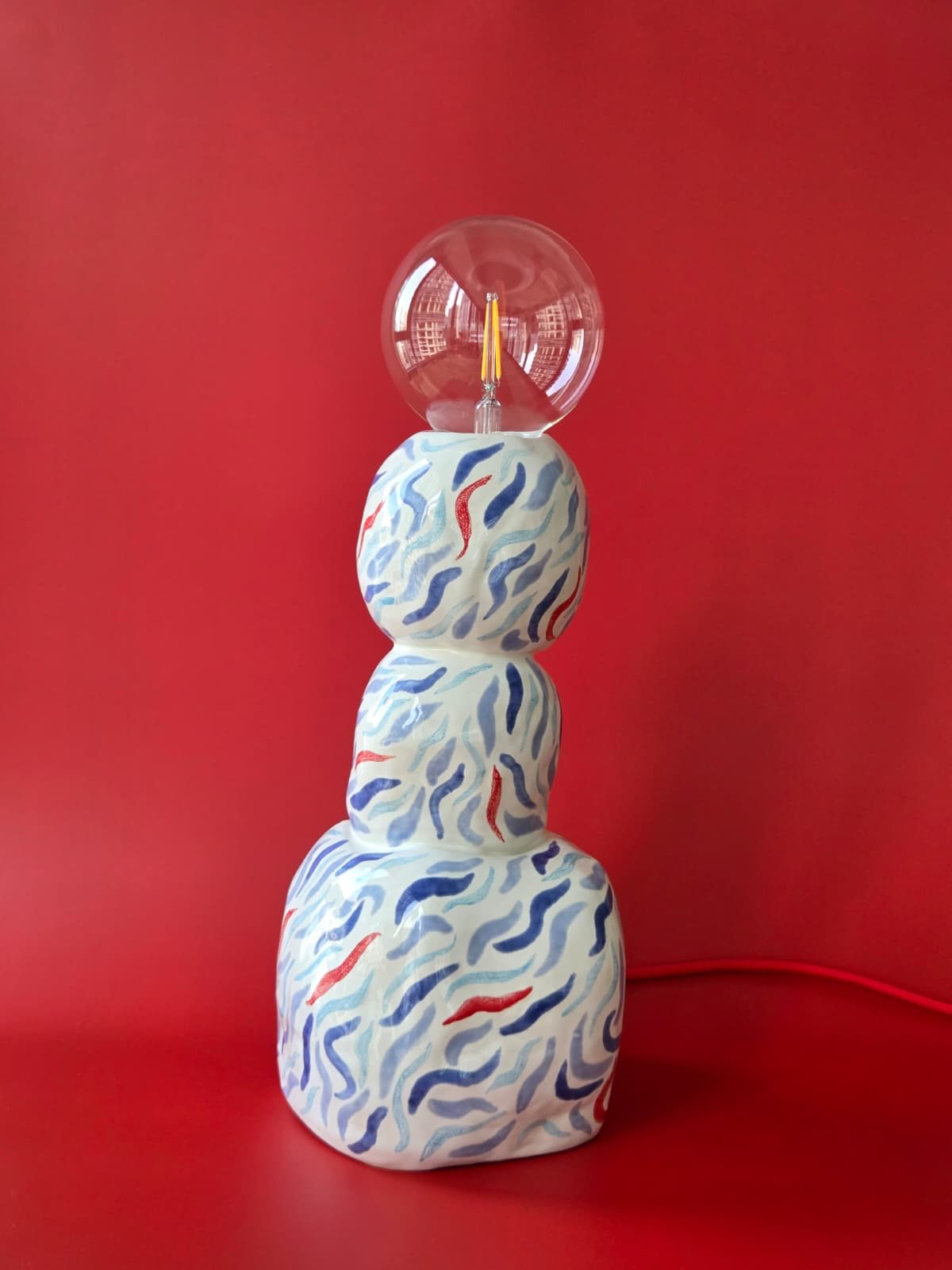
Drift, a stacked stoneware lamp hand-painted with blue and red marks and topped with a clear glass globe against a red backdrop
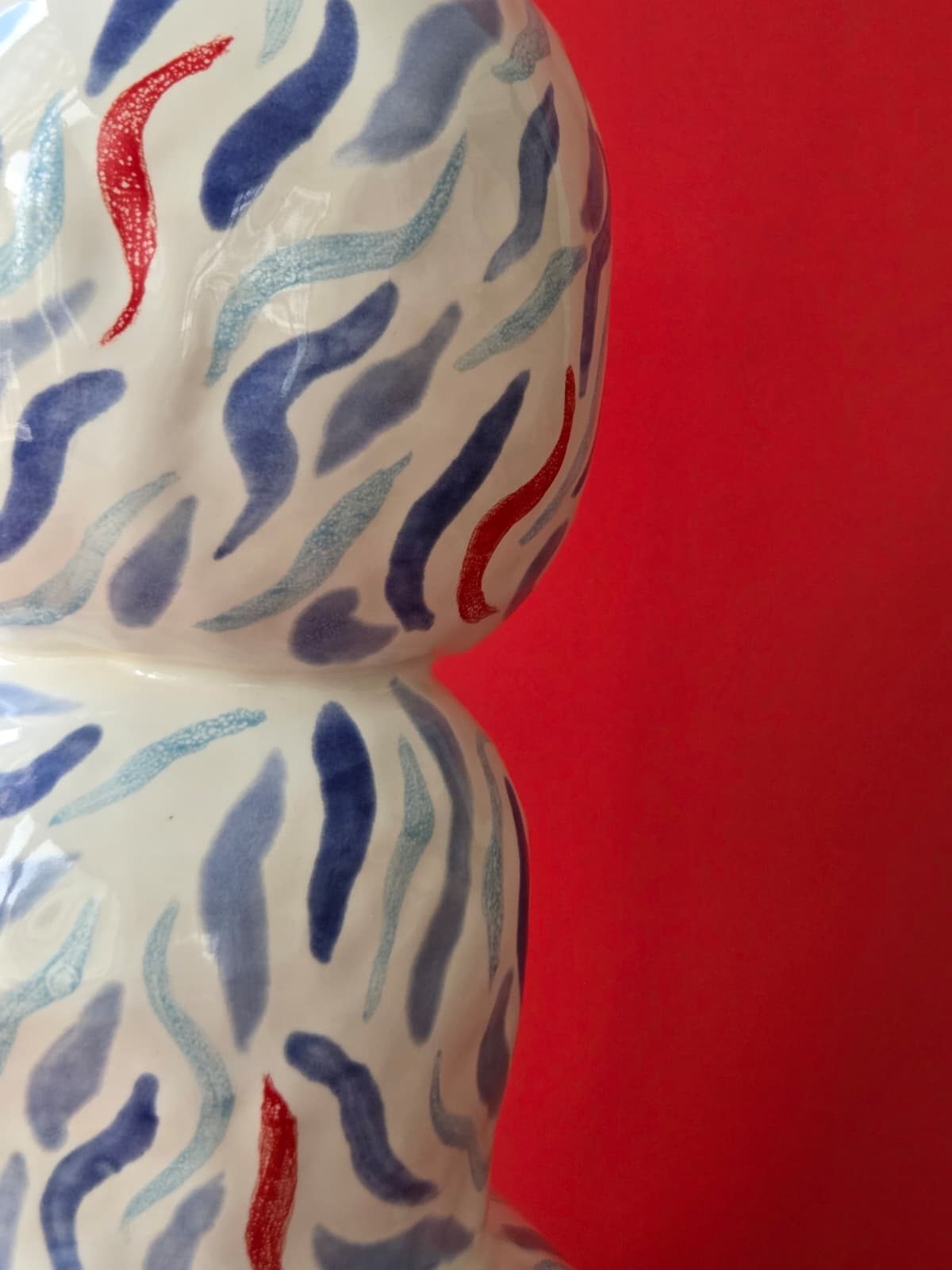
Close detail of Drift's hand-painted blue and red brushmarks across two stacked ceramic forms
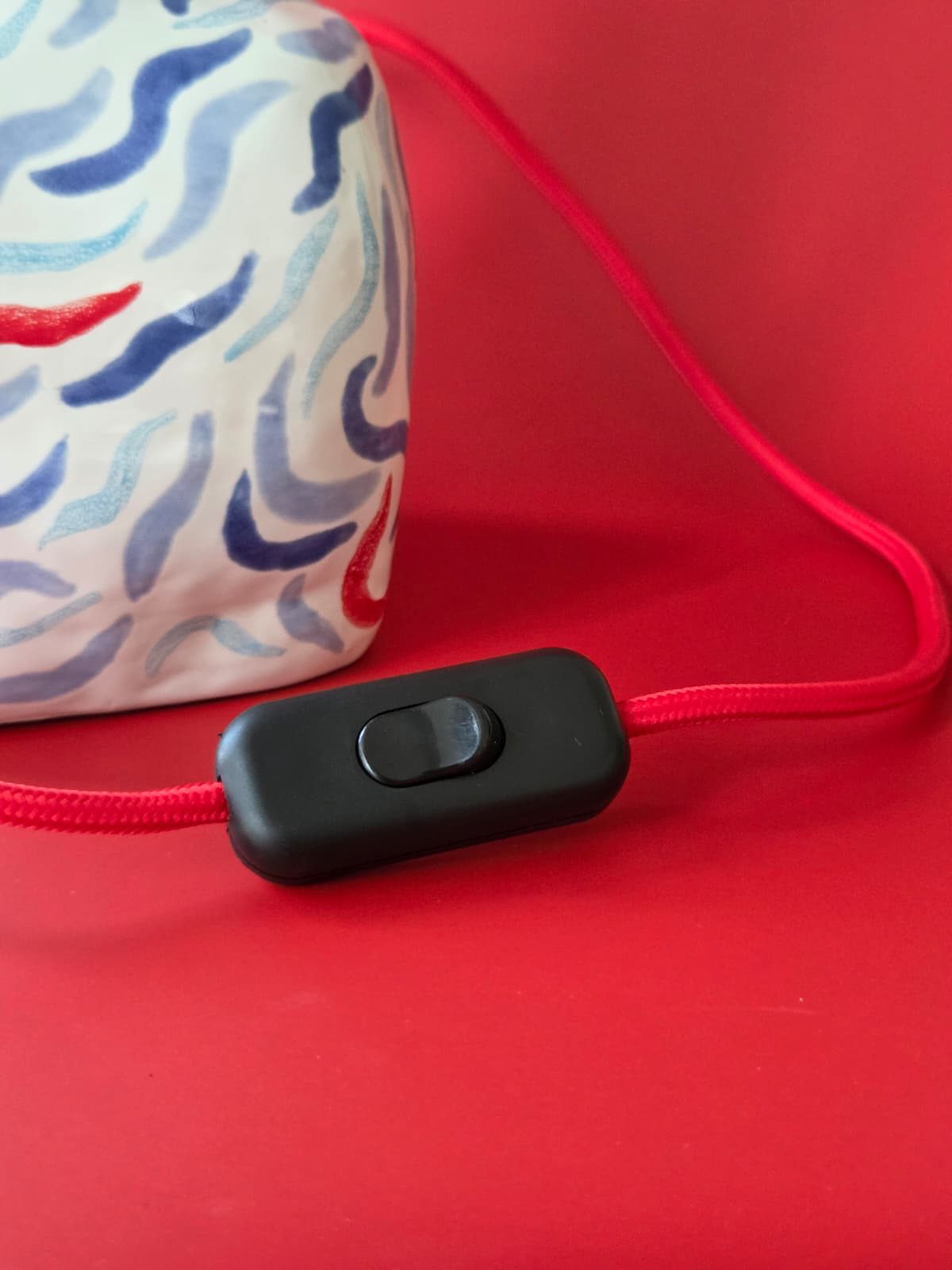
Base of Drift with its red fabric cord and inline switch on a red surface
03

Drift

Drift takes its cues from the movement of water—the shifting currents, softened forms and patterns left behind by its passage. The stacked ceramic forms create a sense of movement upwards, while the hand-painted marks echo the changing surface of the sea.

Topped with a glass globe, the work balances weight and lightness, bringing together the grounded nature of the ceramic with the fluidity of its inspiration.

Materials
Stoneware, glass globe
Year
2025
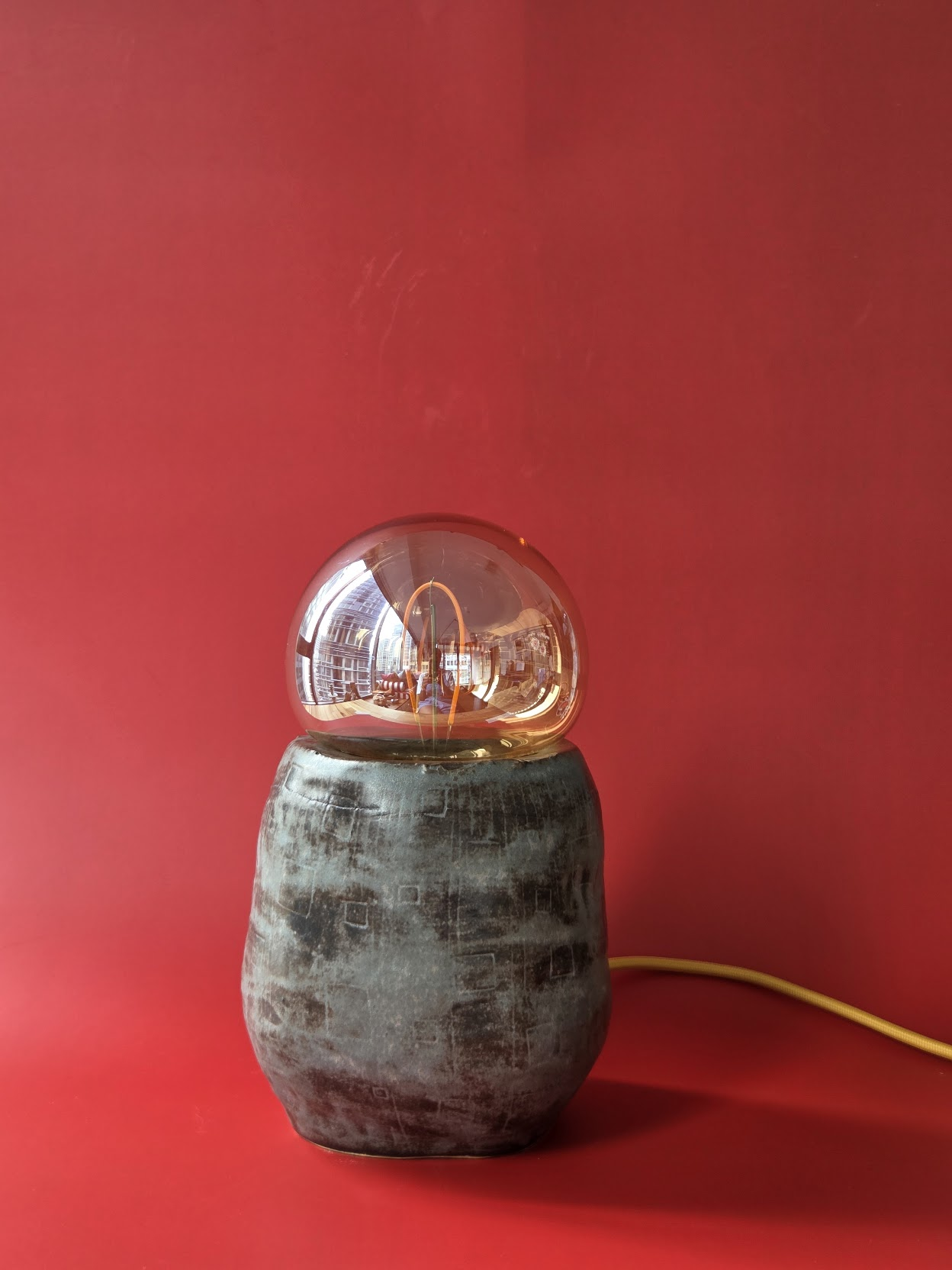
Tarn, an irregular dark stoneware table lamp topped with a warm glass globe against a red backdrop
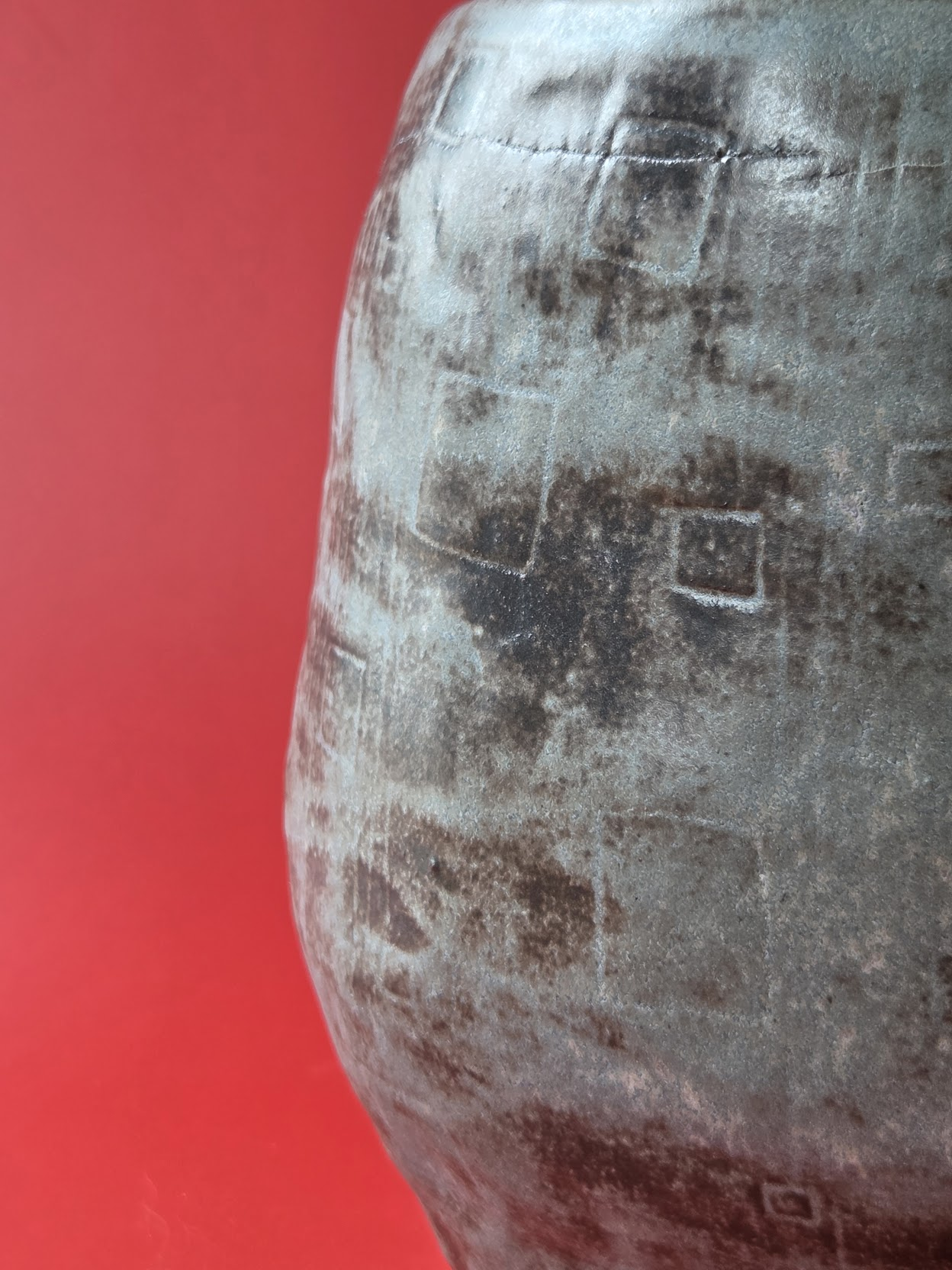
Close detail of Tarn's dark, weathered stoneware surface and impressed geometric marks
04

Tarn

Tarn draws from the meeting of water and stone, where surfaces are shaped by movement, pressure and time. The irregular ceramic form carries the weight and texture of the landscape, contrasted by the smooth glass globe above it.

When lit, the warmth of the globe brings a softer quality to the heavy ceramic form, creating a balance between the two.

Materials
Stoneware, glass globe
Year
2026
Overhead view of Shoal's undulating dark stoneware form with its smoked glass globe resting within it
Detail of Shoal's mottled dark glaze folding across its ceramic form
Shoal, a dark mottled stoneware table lamp with a folding, wave-like form and smoked glass globe against a red backdrop
05

Shoal

Shoal explores the tension between movement and stillness, with a form that gathers and folds in on itself. The undulating ceramic surface creates a sense of movement across the piece, while the dark, mottled glaze gives the form a depth that changes with the light.

The glass globe sits within the ceramic, introducing warmth and softness against its heavier, more sculptural form.

Materials
Stoneware, smoked glass globe
Year
2026
Riffle, a stacked blue and cream glazed stoneware table lamp with a flared top form and smoked glass globe against a red backdrop
Riffle stoneware table lamp seen from the side, showing its stacked shifting forms and smoked glass globe
Close detail of Riffle's layered blue and sand glaze across its stacked ceramic form
Detail of Riffle's mottled glaze flowing across the lower stacked ceramic form
06

Riffle

Riffle explores the relationship between movement and form, with stacked ceramic elements that shift in proportion and direction. The irregular edges and layered glaze create a surface that feels shaped rather than constructed, giving the piece an organic sense of movement.

The glass globe becomes part of the composition, introducing light into the weight of the ceramic and creating a contrast between the two materials.

Materials
Stoneware, smoked glass globe
Year
2026

Pendants

3 pieces
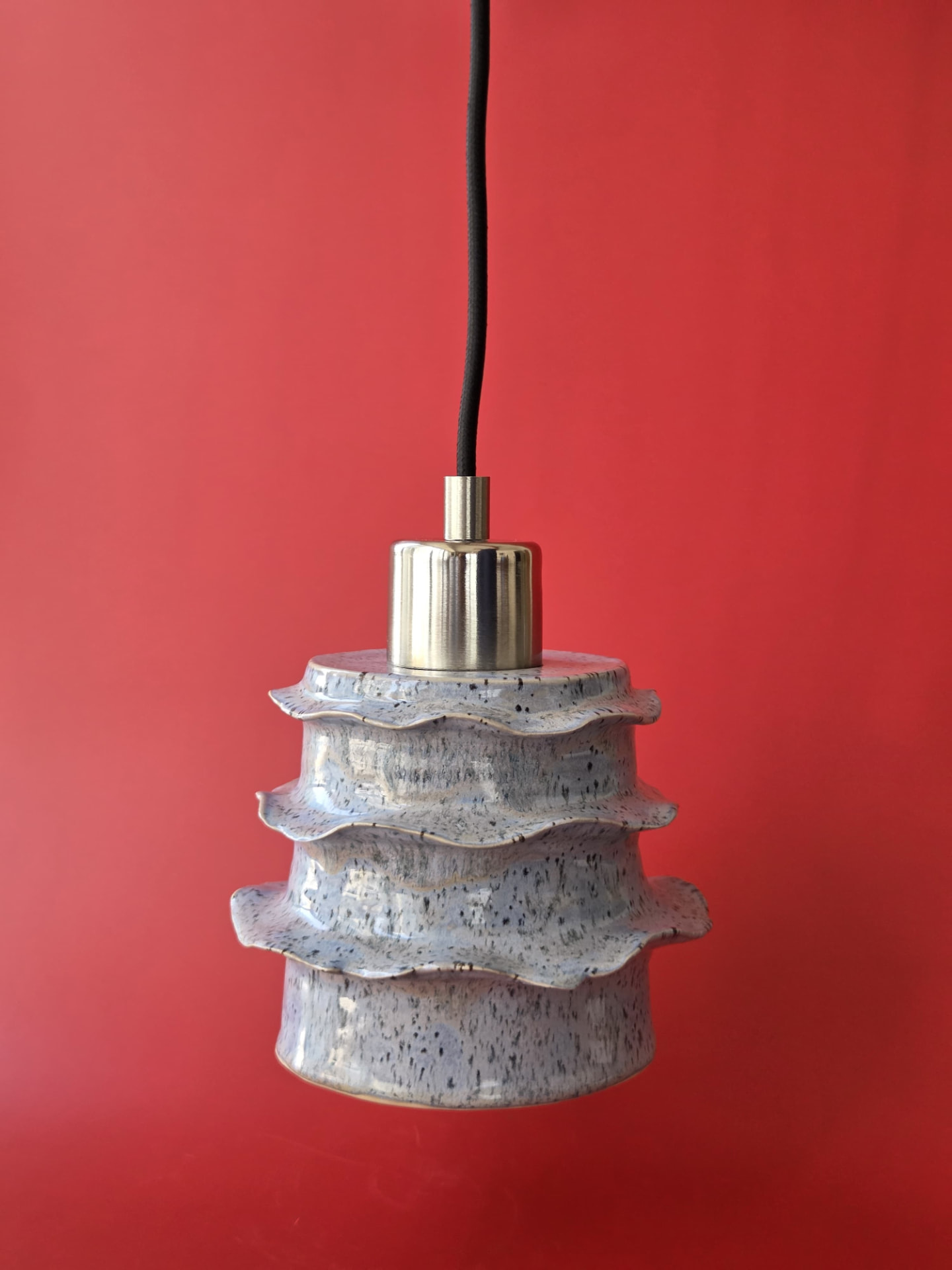
Strata, a three-tiered stoneware pendant light with irregular rim edges and nickel furnishing against a red backdrop
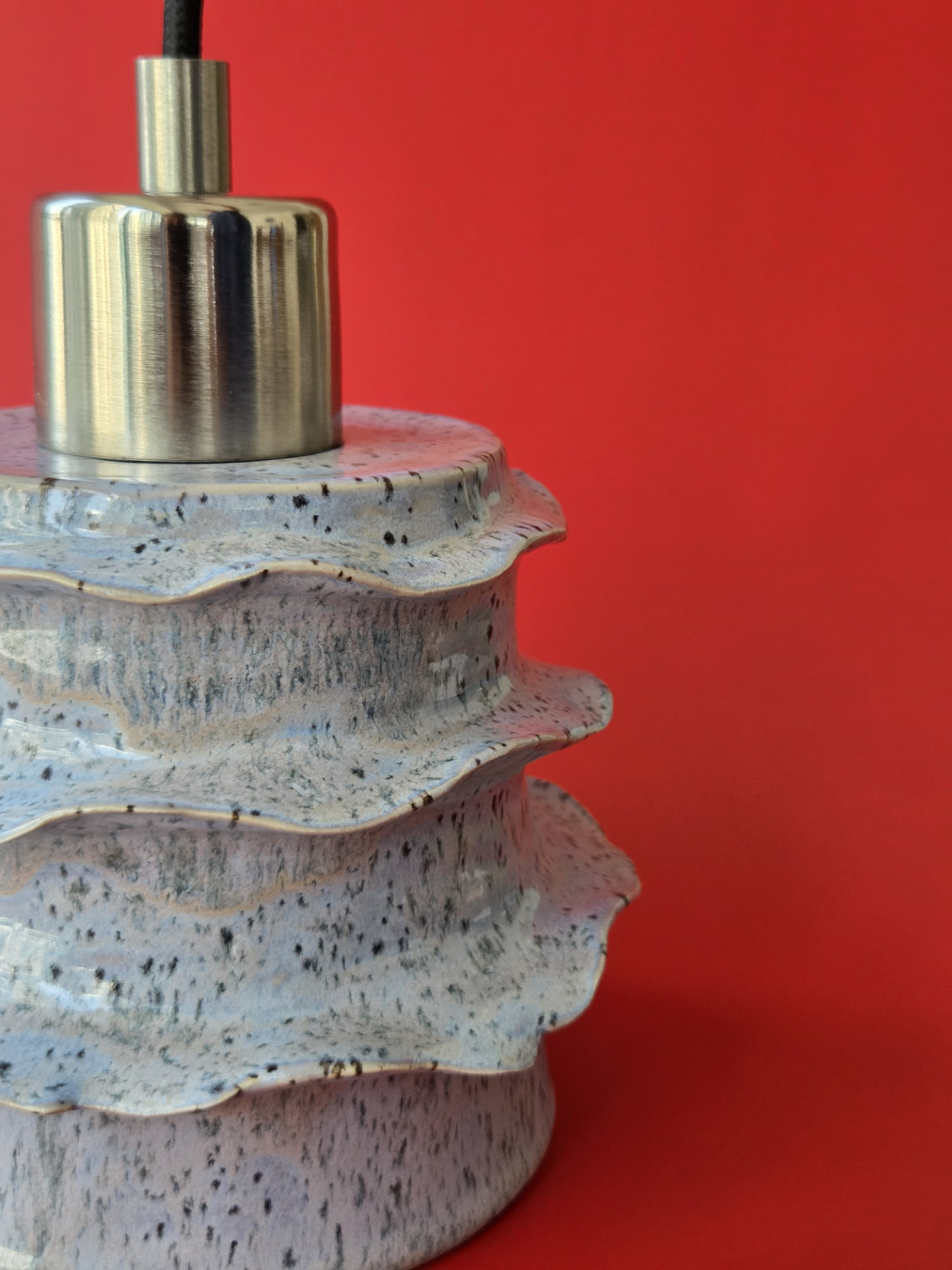
Close detail of Strata's tiered stoneware form, irregular rim edges and nickel furnishing
01

Strata

Strata draws from the layered formations of the natural world, where time, pressure and movement leave their mark on the landscape. Three ceramic tiers build the form, each edged with an irregular rim that interrupts the geometry of the structure.

Suspended as a light, the piece brings together the weight of geological forms with the changing movement of its edges, transforming a familiar architectural shape into something more elemental.

Materials
Stoneware, nickel furnishing
Year
2026
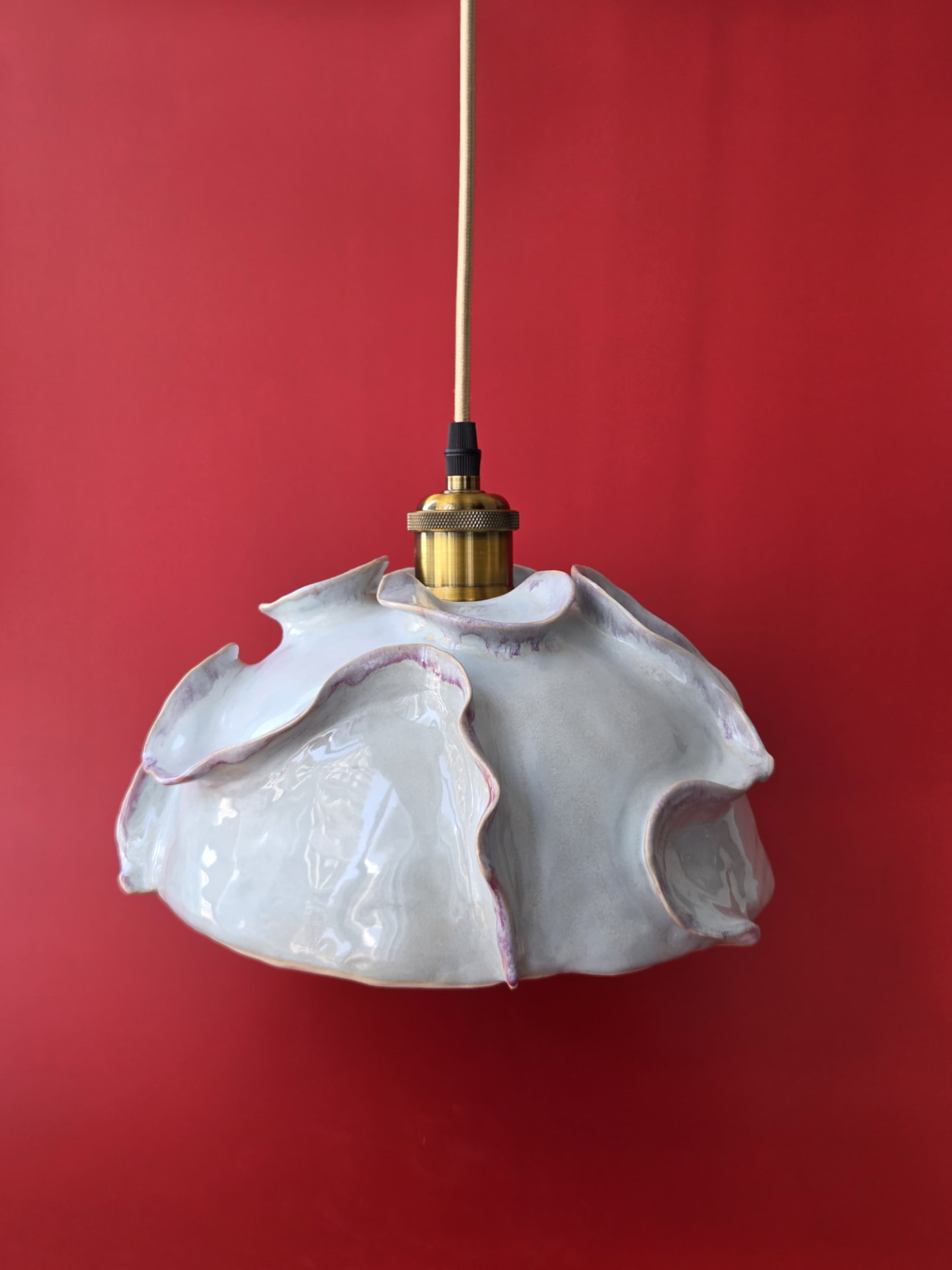
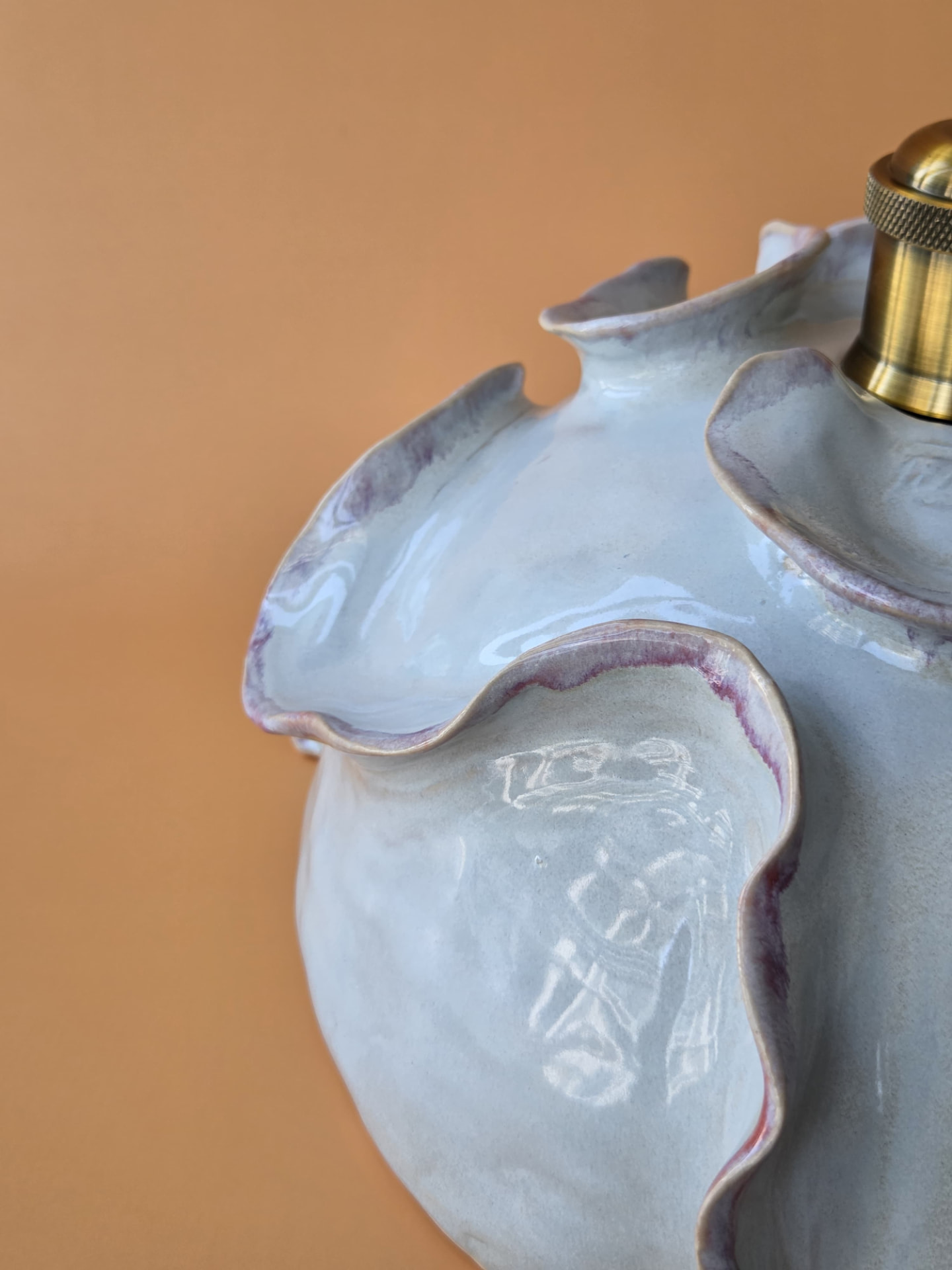
Coralline, a pale-glazed stoneware pendant light with undulating coral-like edges and brass furnishing against a red backdrop
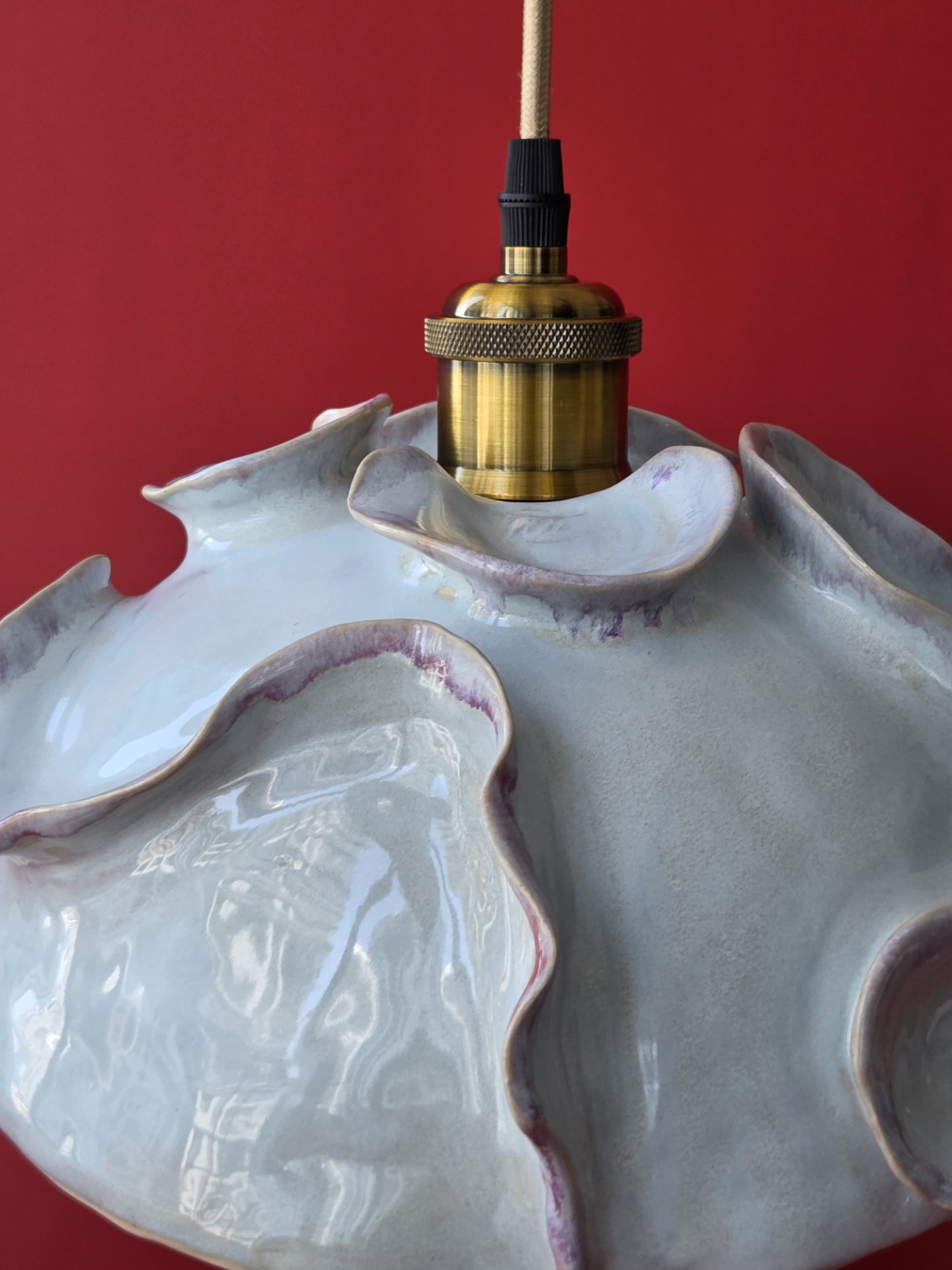
Close detail of Coralline's ruffled rim, pale glaze and brass fixture
Detail of Coralline's layered ceramic form with soft purple tones against a warm backdrop
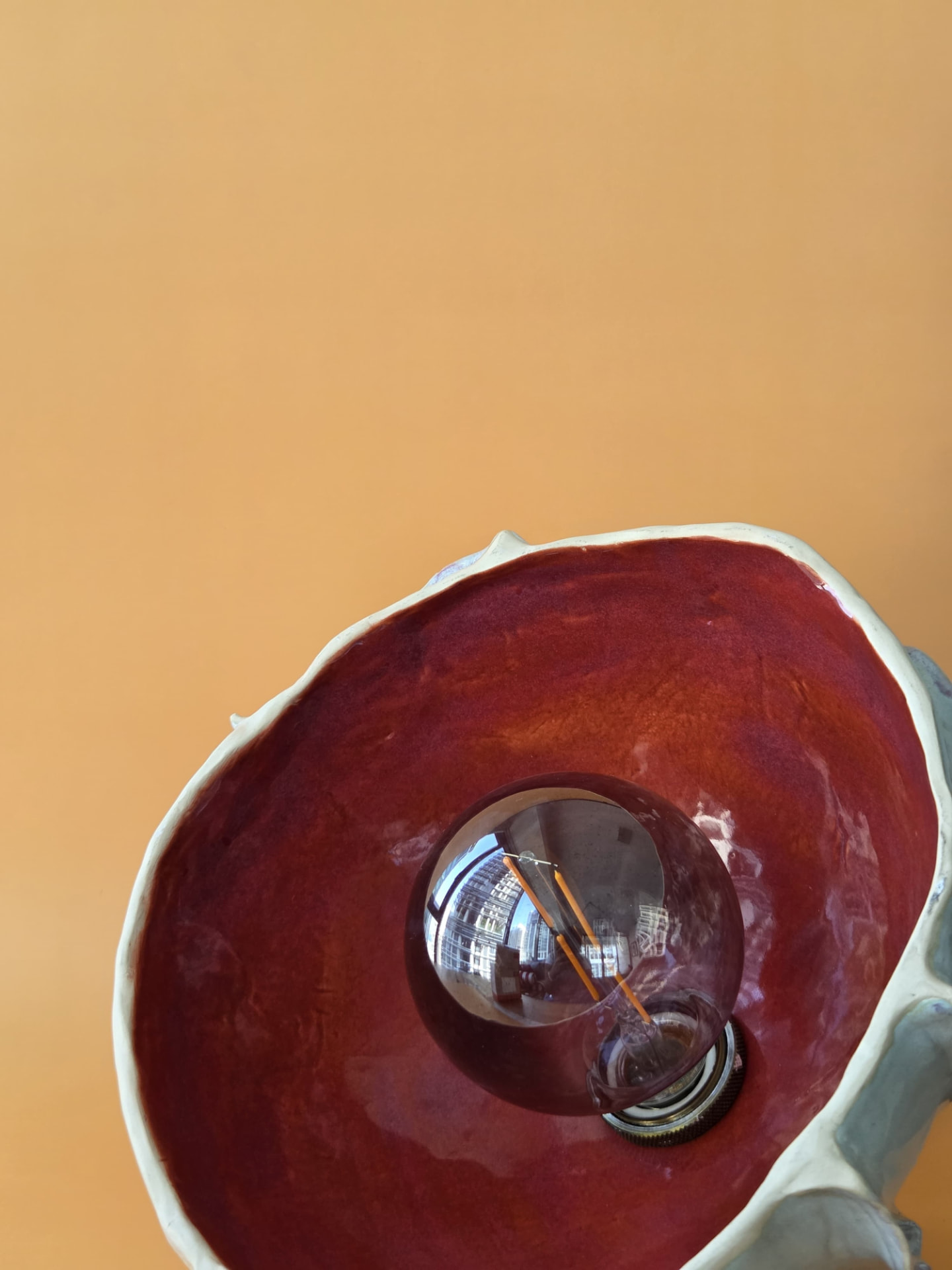
Interior view of Coralline showing the warm-toned glaze and exposed bulb
02

Coralline

Coralline began with the forms of coral growth—layered, irregular and shaped over time. The undulating edges create a sense of movement across the form, while the pale glaze recalls the shifting colours and surfaces of an underwater landscape.

When illuminated, the piece takes on a different presence, bringing warmth to its organic, coral-like form.

Materials
Stoneware, brass furnishing
Year
2026
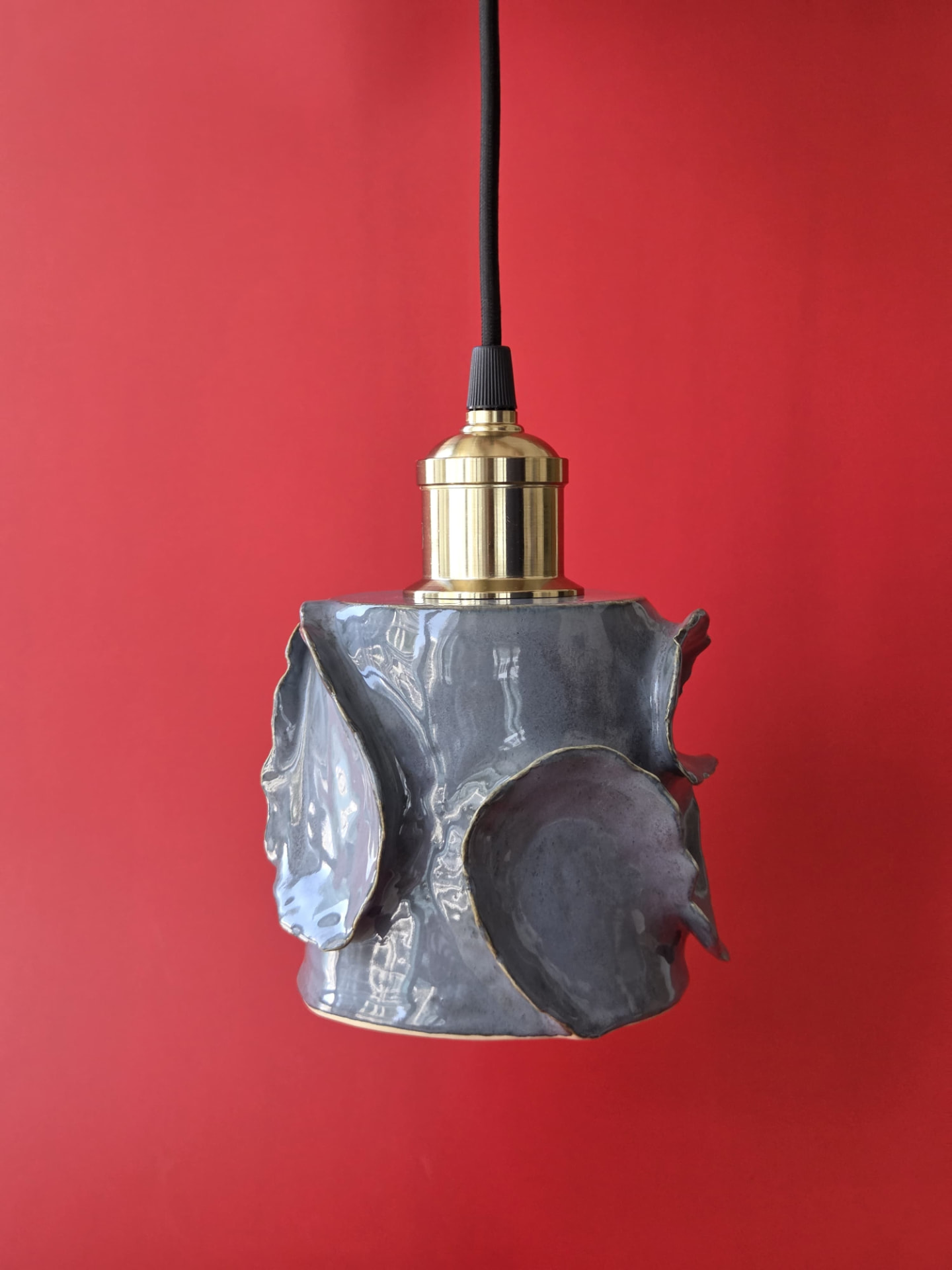
Tidal, a dark-glazed stoneware pendant light with overlapping organic forms and brass furnishing against a red backdrop
03

Tidal

Tidal draws from forms shaped by the movement of water, where surfaces are softened, layered and altered through constant motion. The ceramic body is interrupted by overlapping forms that extend from its surface, creating a tension between structure and movement.

Suspended as a light, the piece transforms these organic forms through illumination, casting shadows across its surface and changing their appearance as the light shifts.

Materials
Stoneware, brass furnishing
Year
2026

Objects

3 pieces
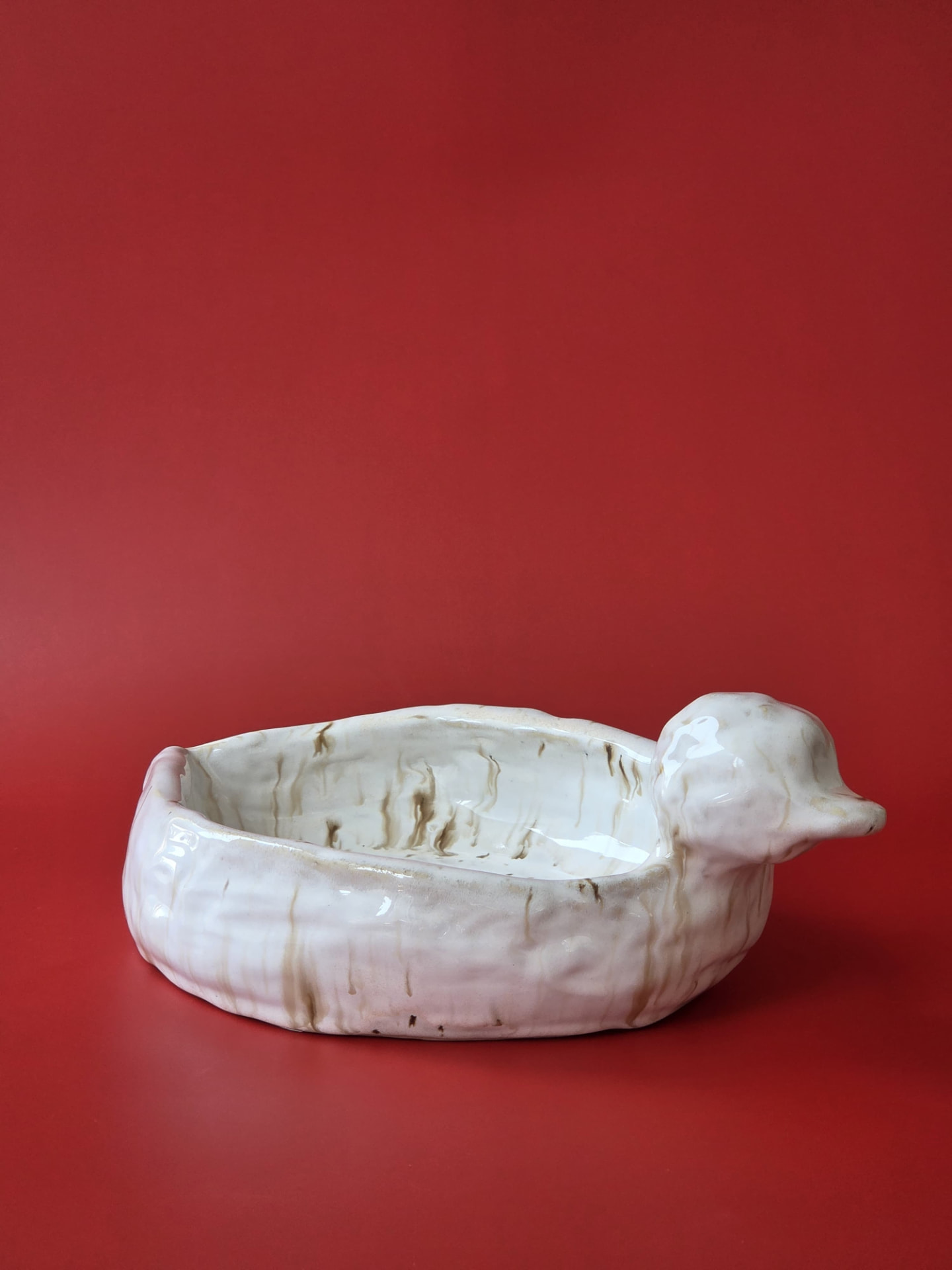
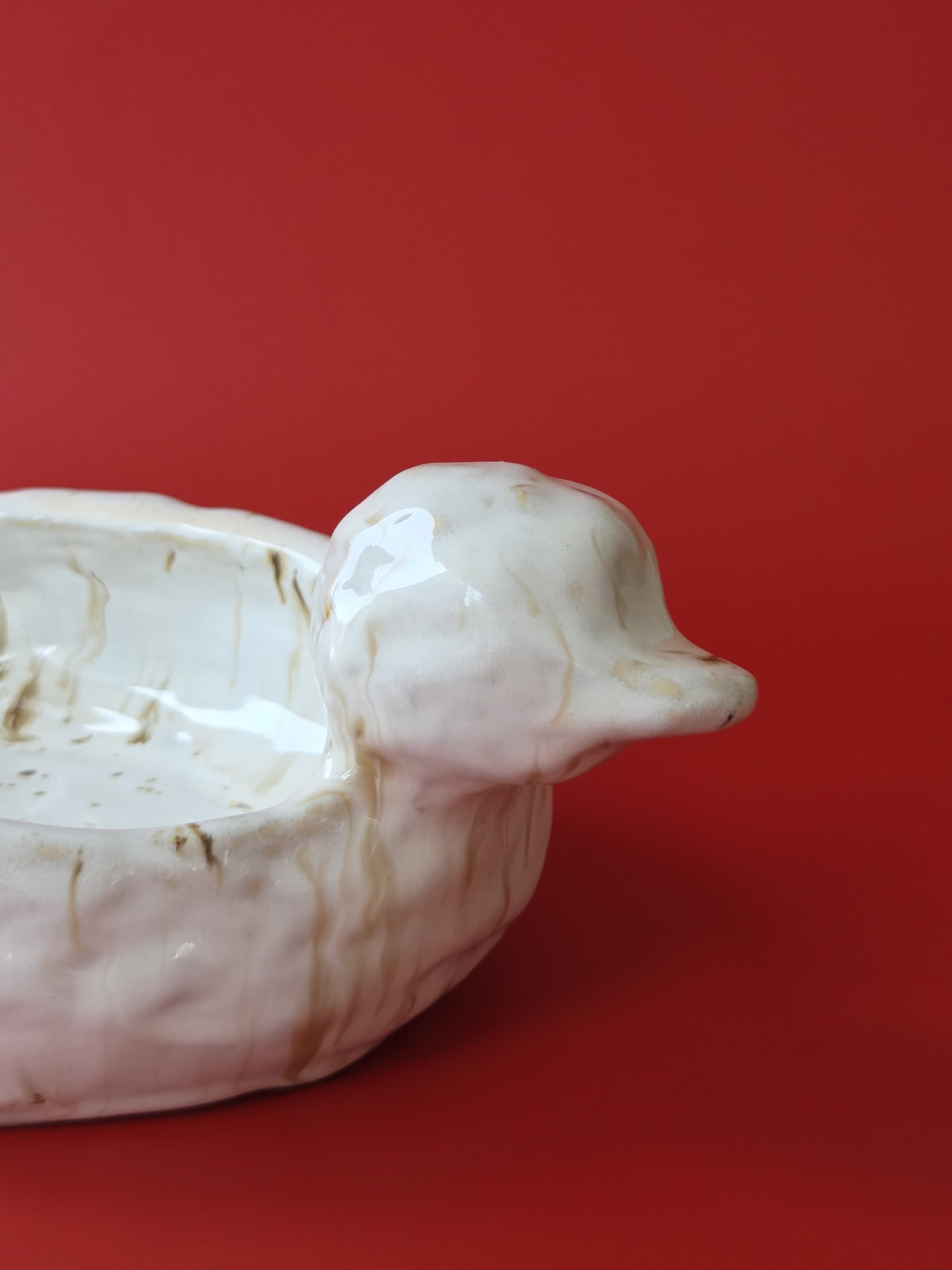
Mooring, a cream-glazed ceramic object shaped like a resting waterbird against a red backdrop
Detail of Mooring's sculpted head and beak with cream and ochre glaze
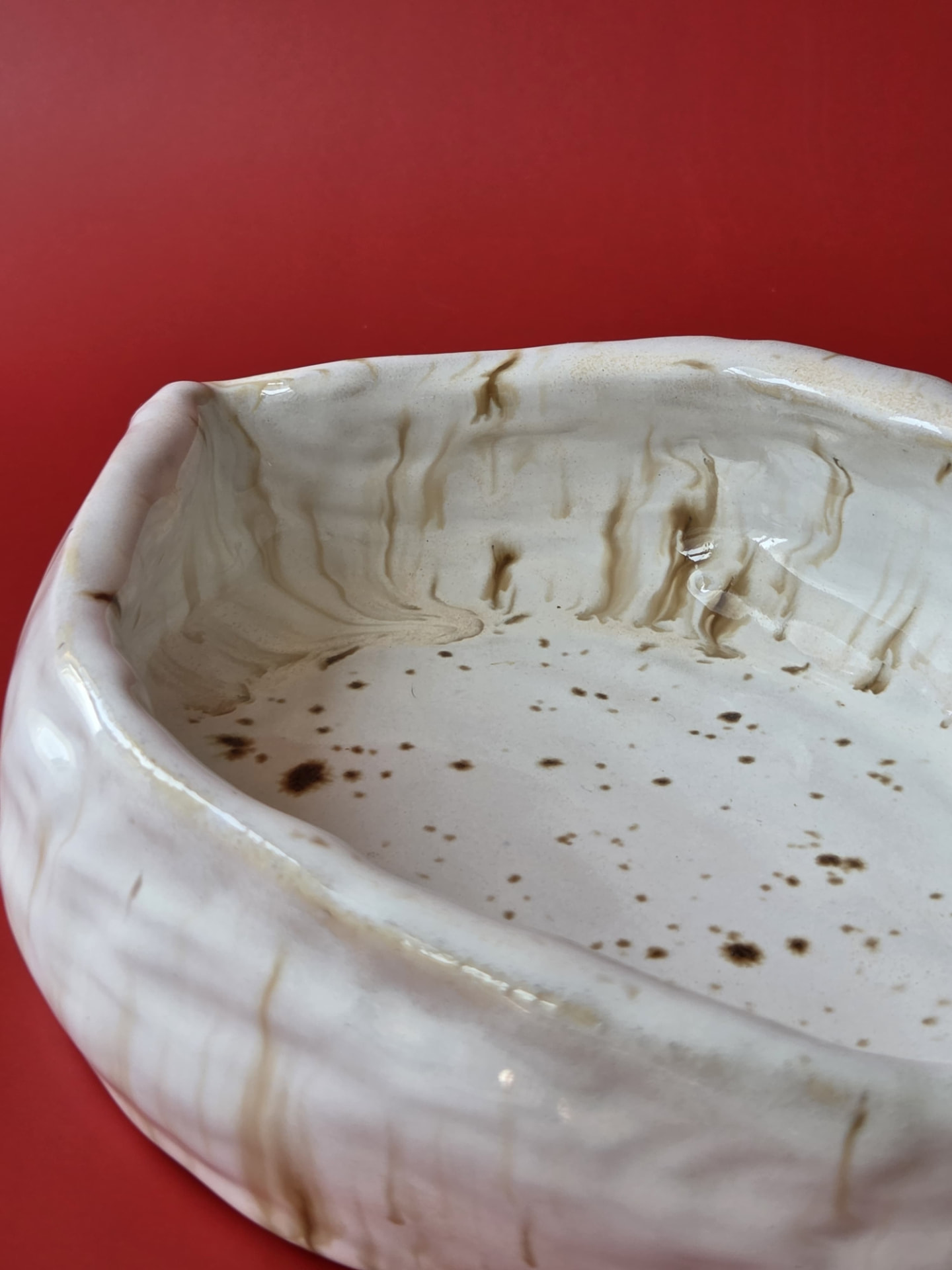
Interior detail of Mooring showing its speckled glaze and drip marks
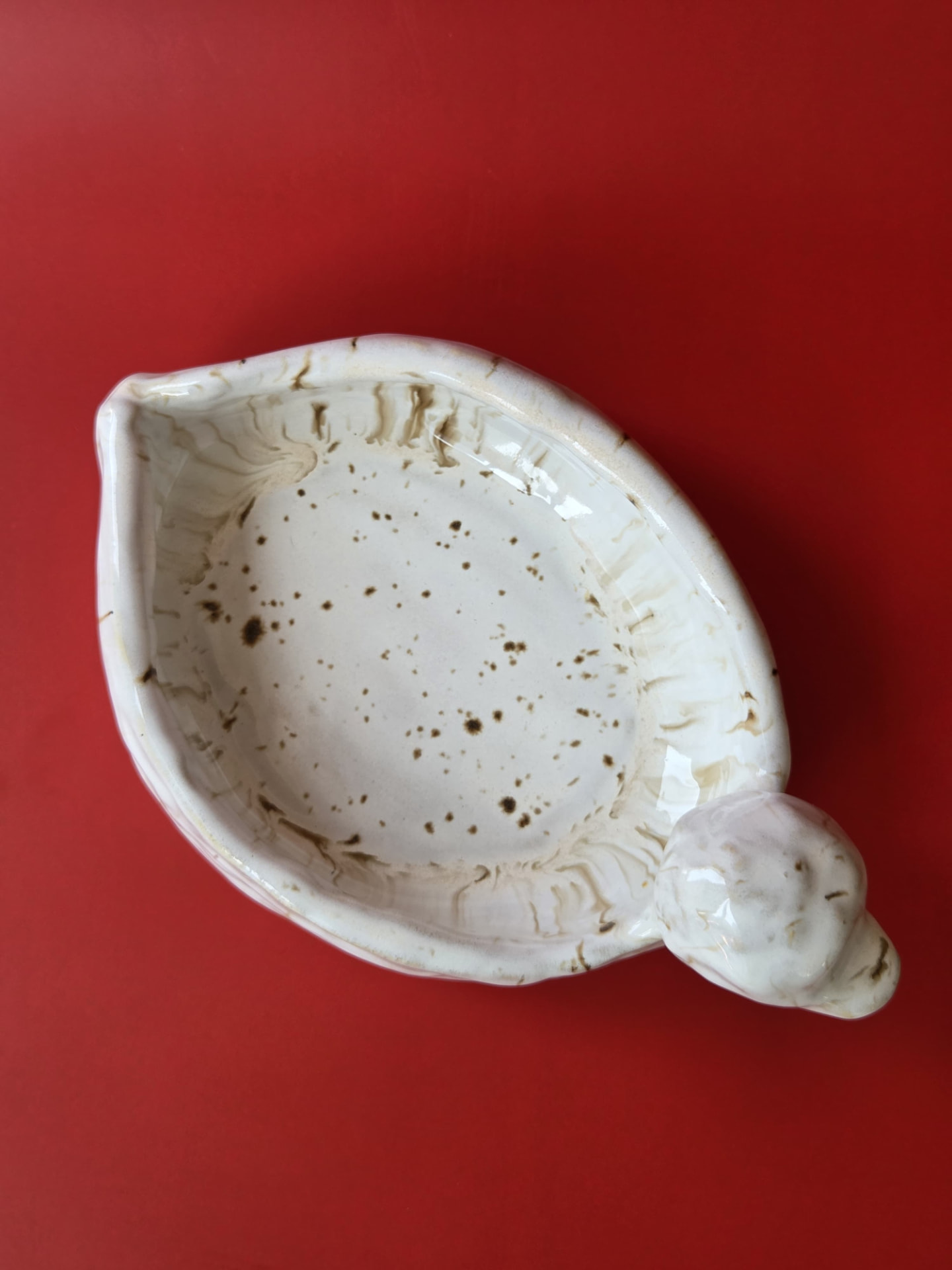
Overhead view of Mooring's leaf-shaped form and sculpted head
01

Mooring

Mooring considers a vessel that feels complete before a single stem is placed. Borrowing the form of a resting waterbird, the piece considers flowers not as decoration, but as an extension of the sculpture itself.

Designed for ikebana, the arrangement becomes the final element of the composition, changing with the seasons while the vessel remains unchanged.

Materials
Stoneware
Year
2026
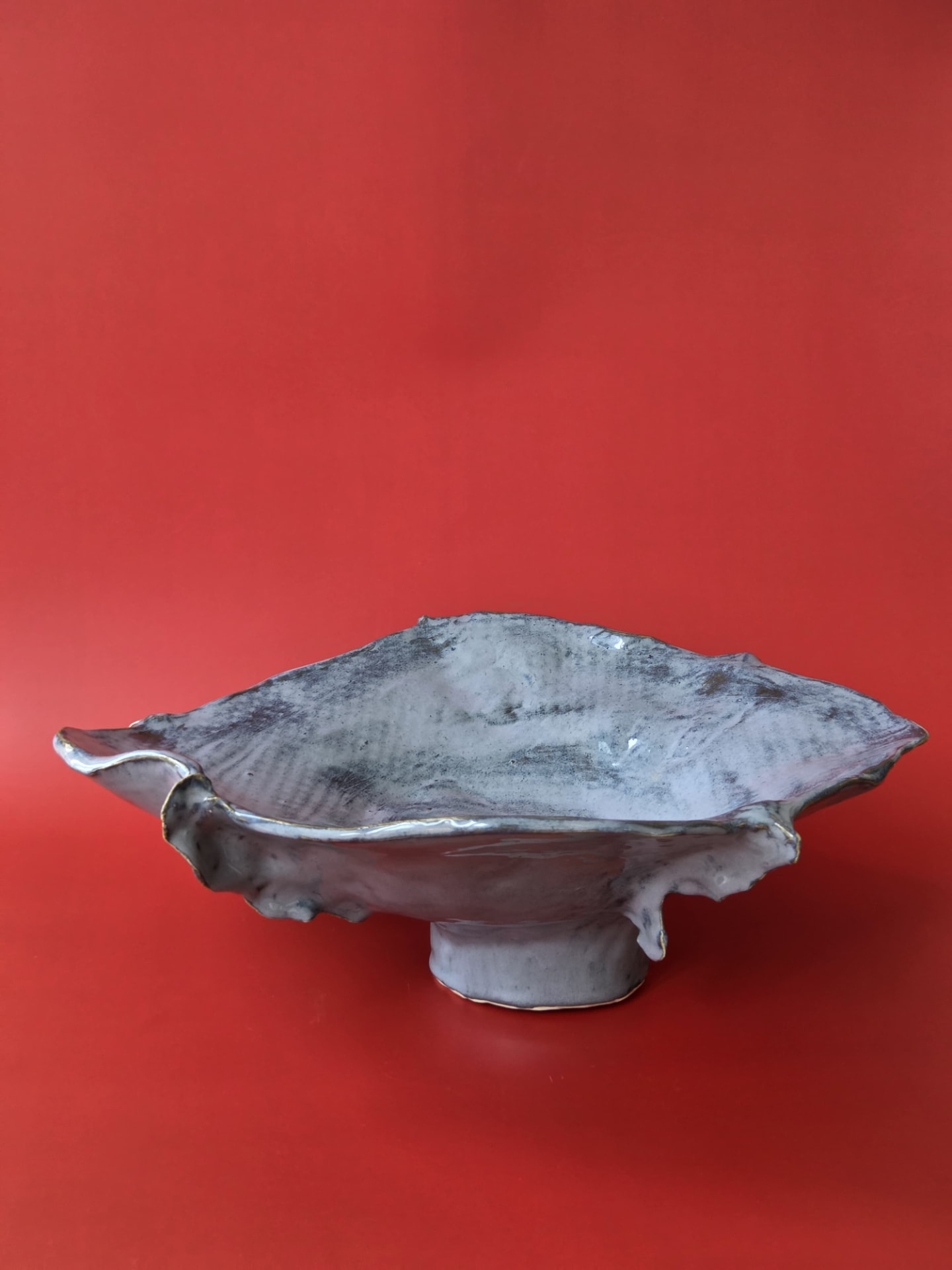
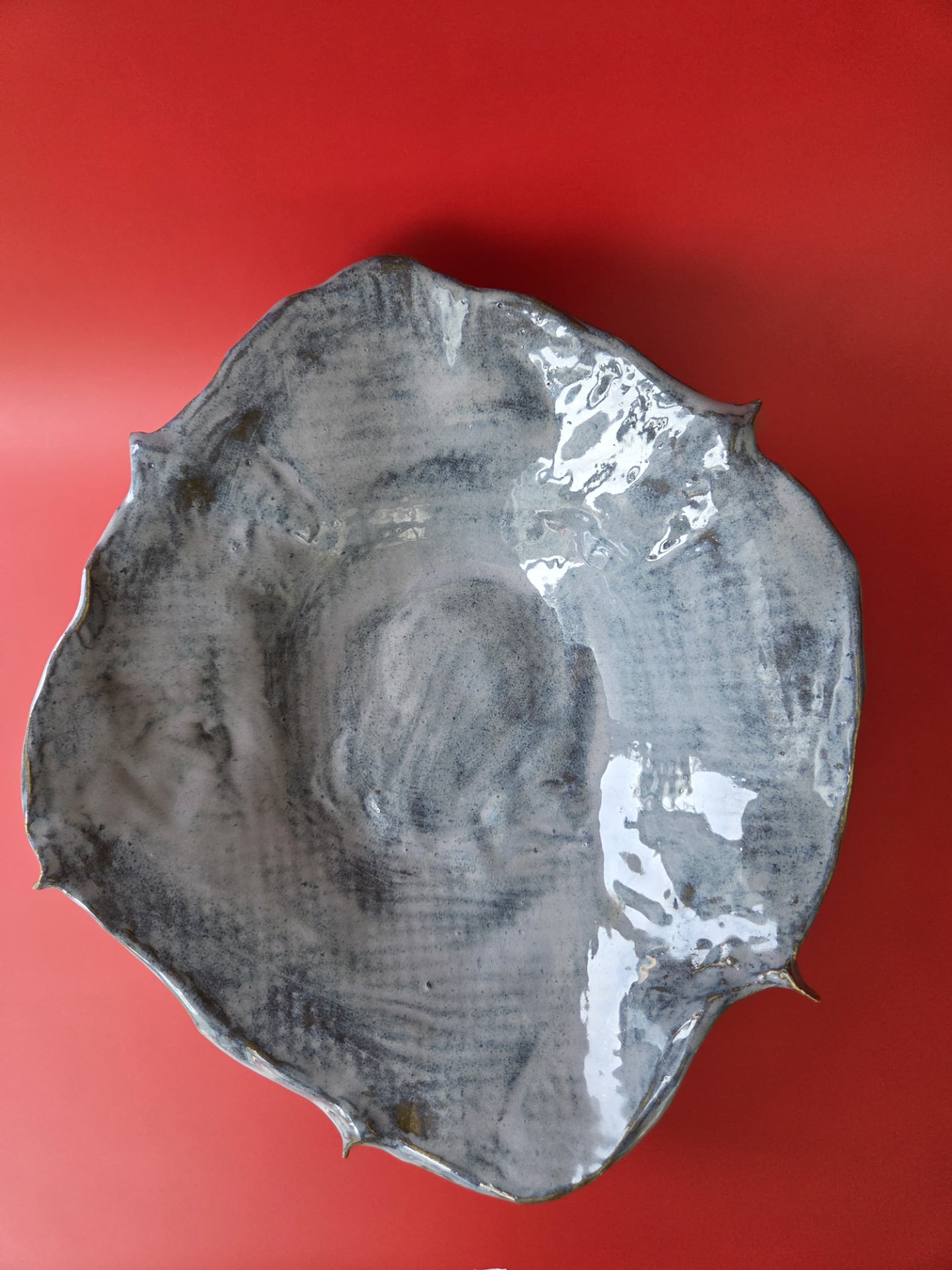
Caldera, a wide grey-glazed ceramic object with a rippled, rising rim against a red backdrop
Overhead view of Caldera showing its broad form and pooled grey glaze
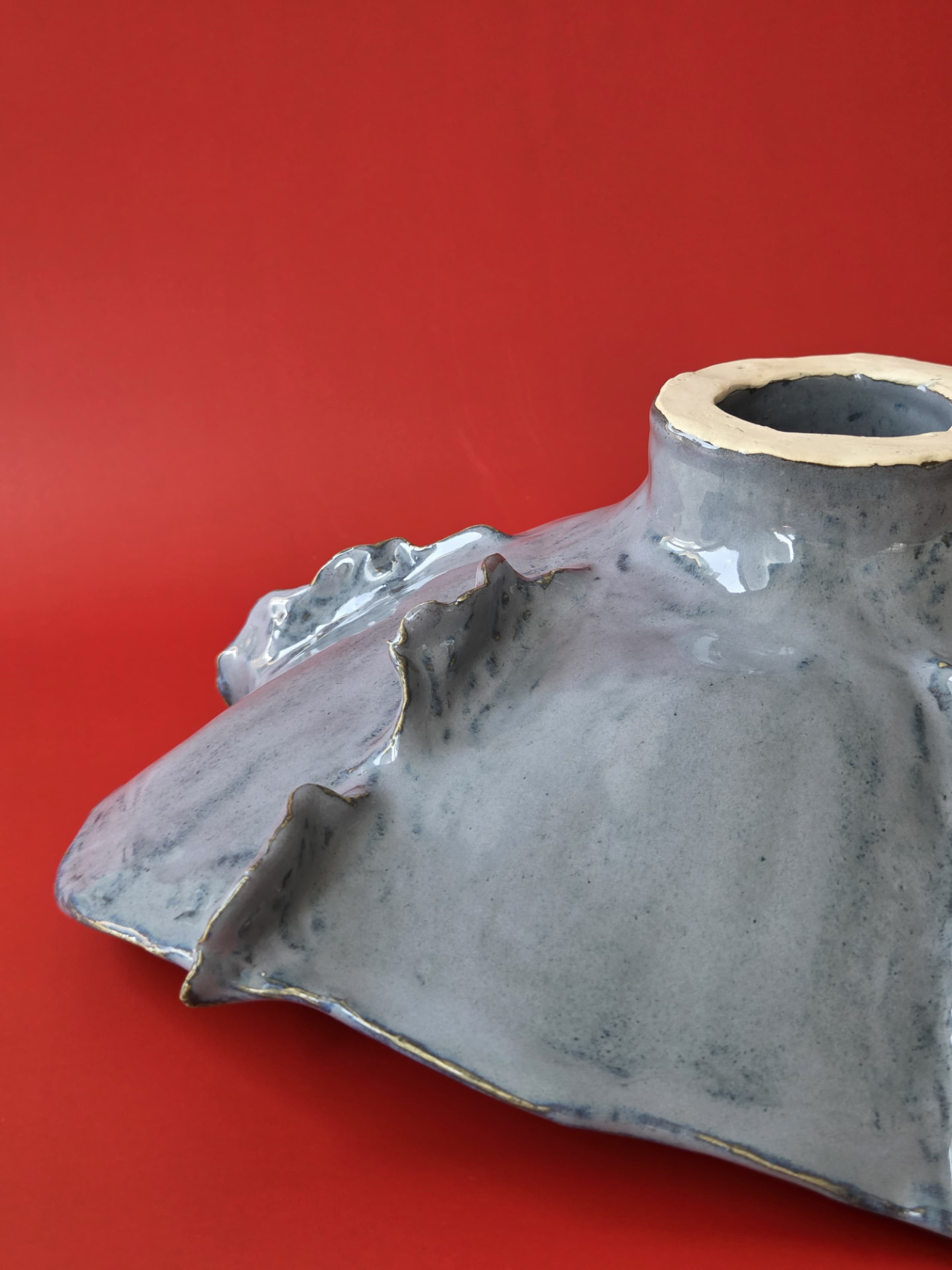
Detail of Caldera's central opening and torn rim edges
02

Caldera

Caldera explores a landscape shaped by absence rather than accumulation. The rising rim defines the form, while the central vessel anchors the arrangement within it.

Designed for ikebana, each composition inhabits the terrain differently, altering the work through placement rather than addition.

Materials
Stoneware
Year
2026
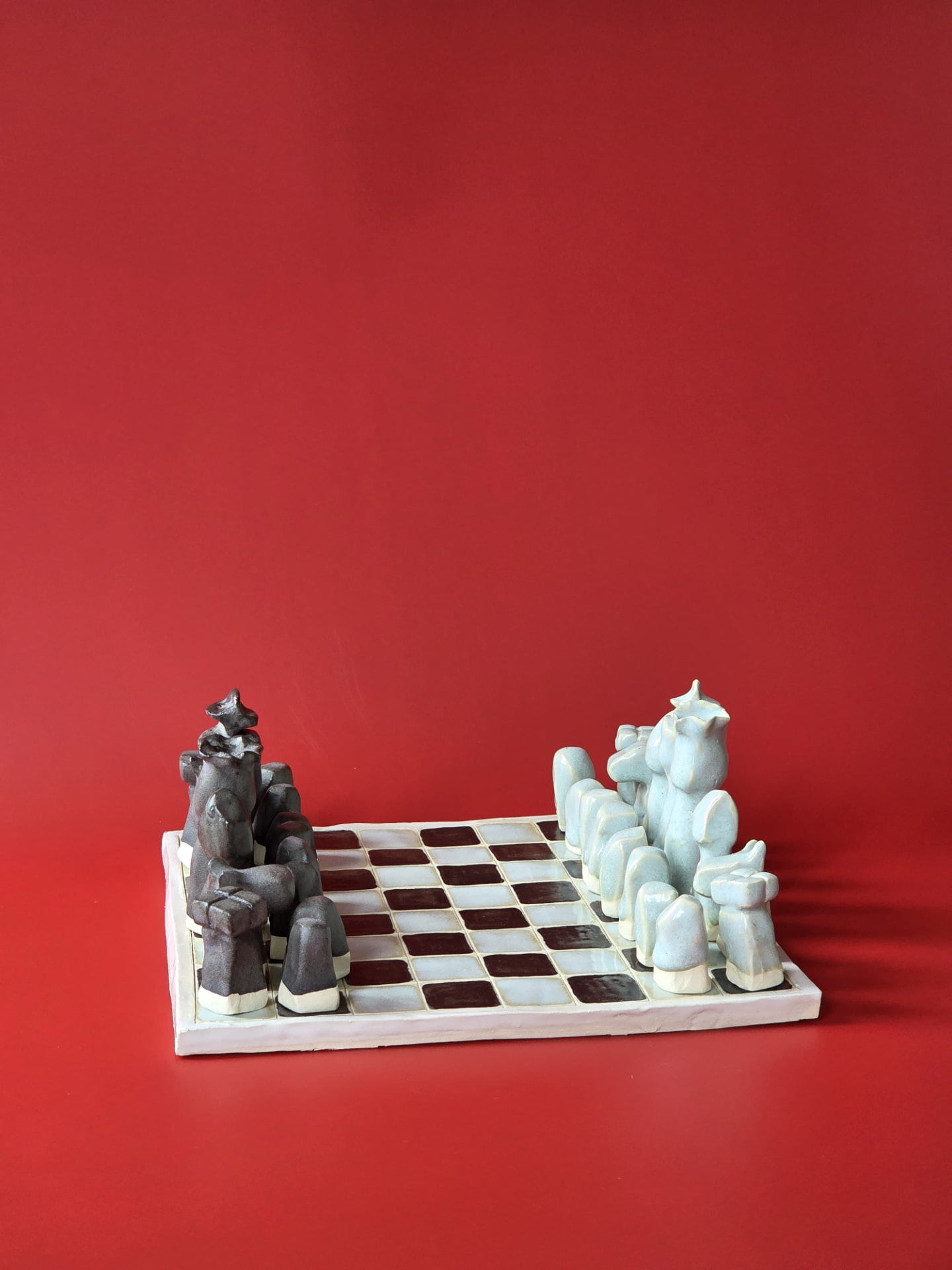
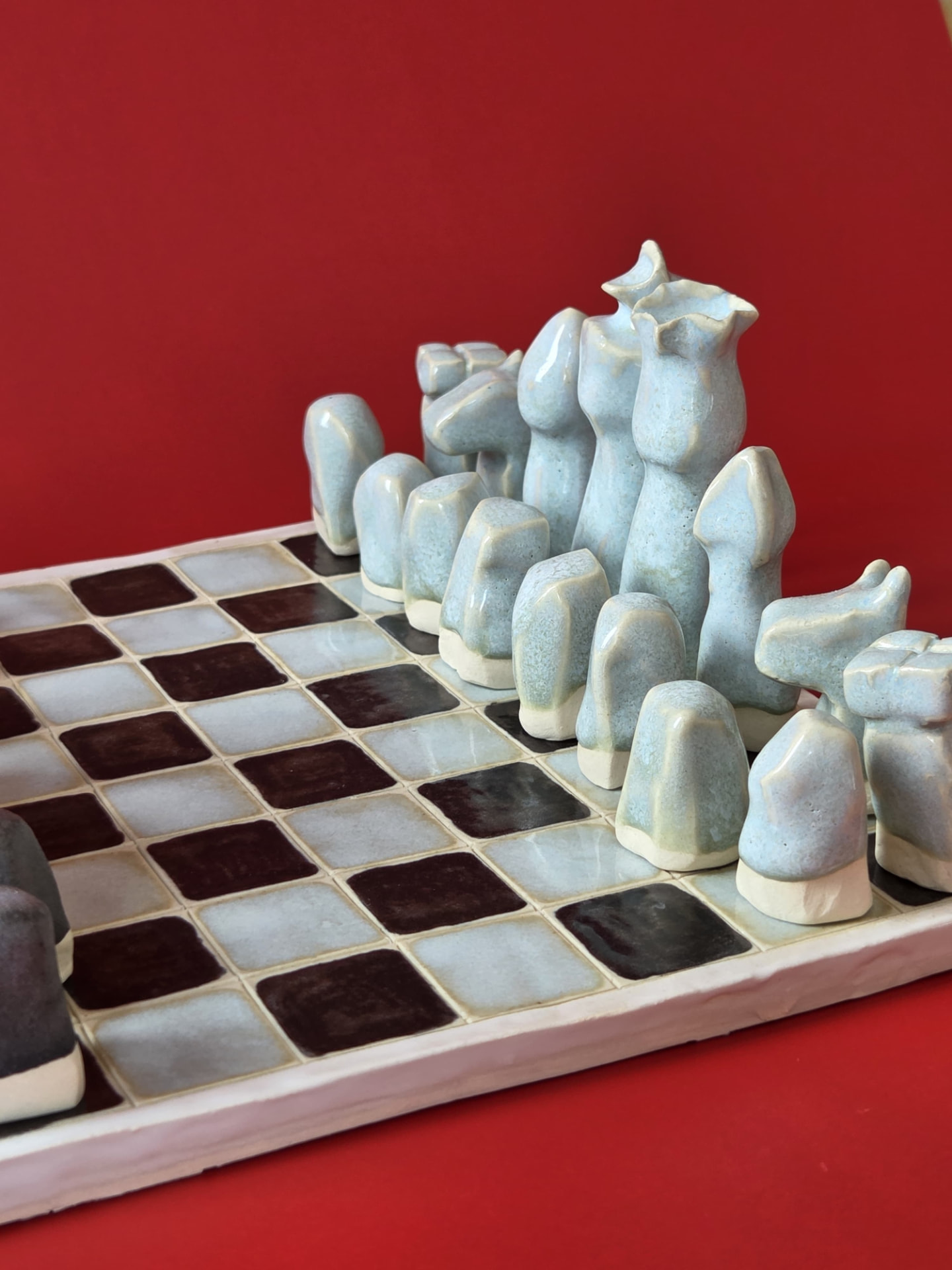
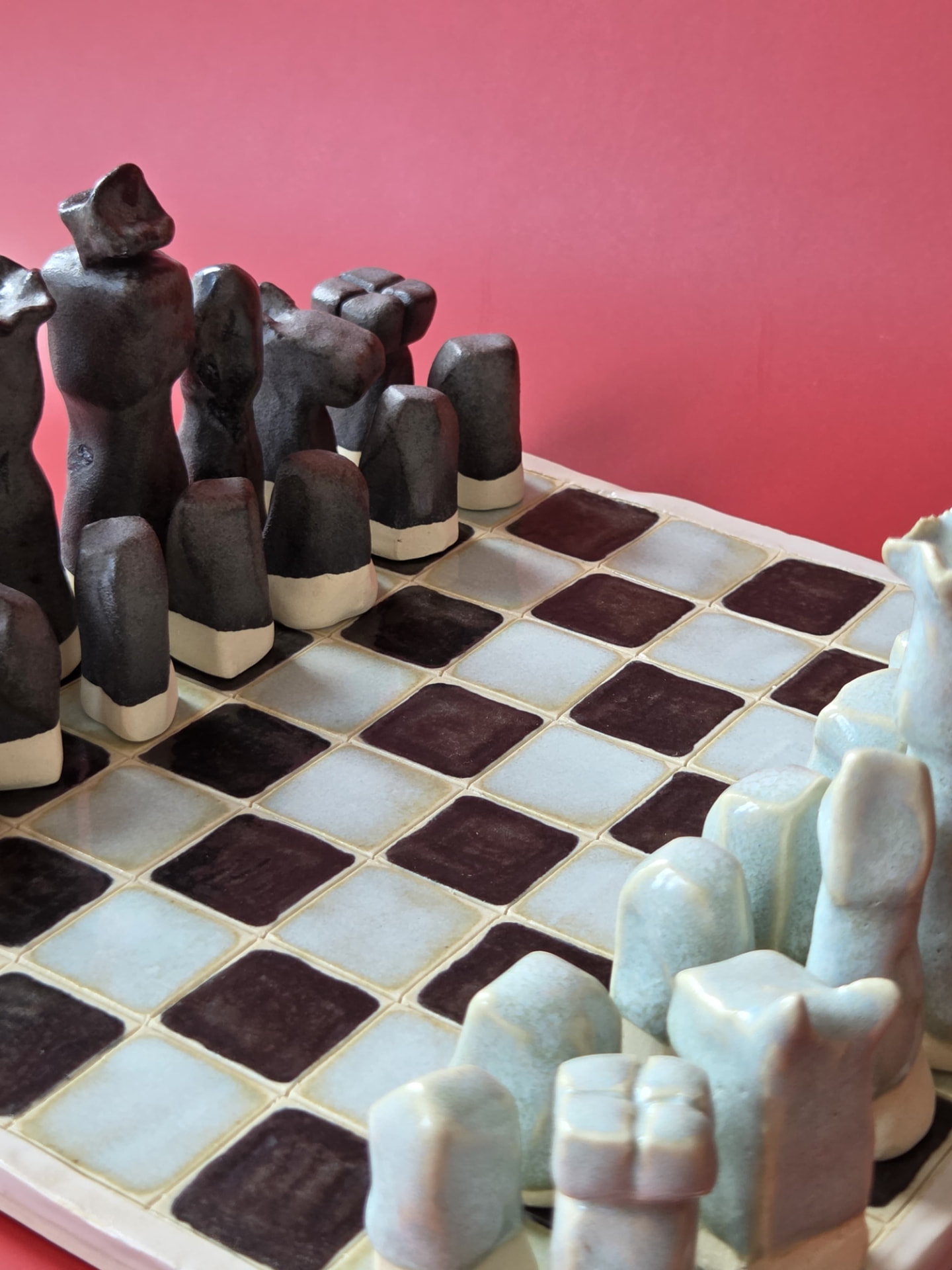
Littoral, a handbuilt ceramic chess set with eroded, stone-like pieces on a glazed checkered board against a red backdrop
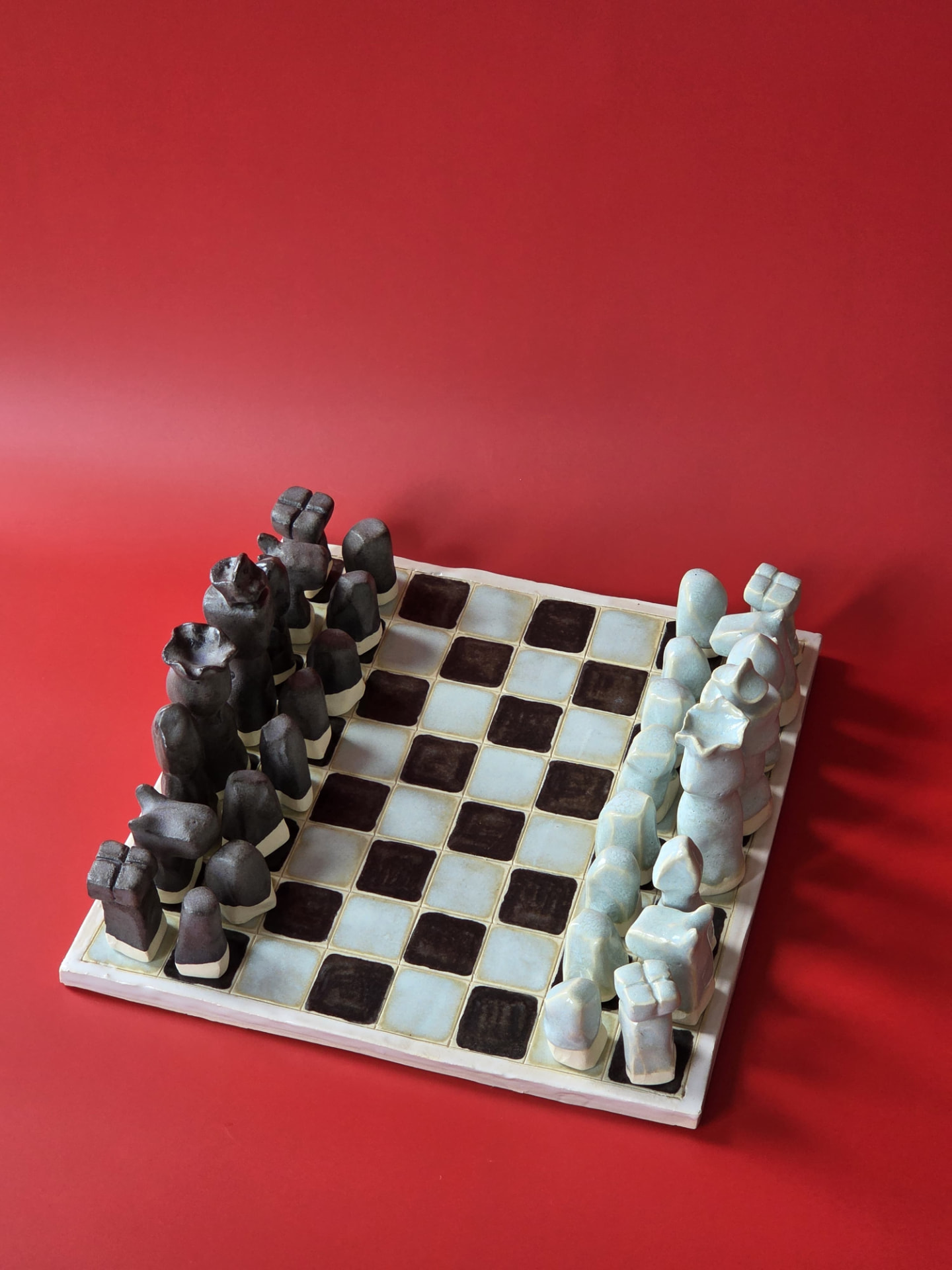
Overhead view of Littoral's full chess set arranged on its glazed checkered board
Detail of Littoral's pale blue glazed pieces with softened coastal forms
Detail of Littoral's dark, eroded pieces along the edge of the checkered board
03

Littoral

Littoral places a chessboard at the boundary where land meets water—a place that is constantly defined and redefined. The pieces borrow from eroded stone and coastal forms, while the board imposes a geometry neither landscape would naturally choose.

Through play, the composition is continually rewritten, each move shifting the balance between order and erosion.

Materials
Stoneware
Year
2026